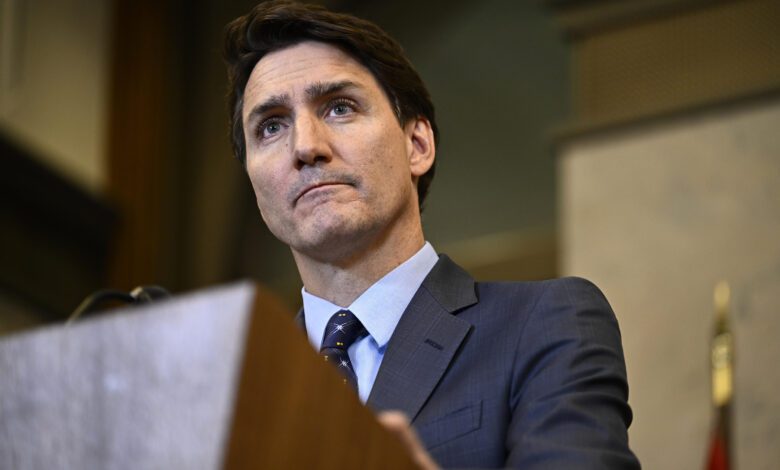
Prime Minister Justin Trudeau appeared for a second time before Canada’s public inquiry into foreign interference on October 16, 2024. Commissioner Marie-Josée Hogue was examining how federal institutions detect, deter and respond to covert activity by foreign states targeting elections, politicians and diaspora communities.
Why the inquiry returned to Trudeau
The commission’s first phase examined alleged interference in the 2019 and 2021 federal elections and the flow of intelligence to decision-makers. Its second phase assessed whether departments, agencies and governance systems were capable of responding effectively.
As prime minister, Trudeau received classified material unavailable to most witnesses and was responsible for decisions made by cabinet and senior officials. His evidence was therefore central to both information flow and political accountability.
A claim about Conservative politicians
Trudeau testified that intelligence identified several current or former Conservative parliamentarians and candidates as engaged in, vulnerable to or surrounded by clear indications of foreign-interference activity. He criticized Conservative Leader Pierre Poilievre for not obtaining the security clearance needed for certain classified briefings.
Later in his testimony, Trudeau acknowledged that intelligence also concerned Liberal figures and people associated with other parties. Intelligence is collected to assess risk and is not equivalent to admissible evidence or a finding that every named person knowingly cooperated.
The dispute over secret briefings
The government argued that a cleared party leader could receive detailed warnings and protect colleagues. Poilievre said accepting the process would restrict what he could disclose publicly and called on the government to release names when legally possible.
Both public warning and protected intelligence have legitimate roles. A responsible system needs a way to brief party leaders on actionable risk while allowing an independent authority to address misconduct that cannot safely be exposed in partisan debate.
Foreign states and different methods
The inquiry considered activity attributed to China, India, Russia and other actors. Methods included covert relationships, pressure on communities, disinformation, political financing concerns and threats against individuals.
Foreign interference is not the same as ordinary diplomacy or advocacy by Canadians who care about another country. The defining concern is deceptive, coercive, clandestine or threatening conduct directed by or linked to a foreign state.
The India crisis
Trudeau’s appearance followed RCMP allegations that agents connected to the Indian government were involved in violent crimes in Canada. India denied the claims, and both governments expelled diplomats.
The commission was not a criminal trial of those allegations. It could examine whether institutions shared warnings and protected targets, while police and courts retained responsibility for individual offences.
Protecting people while informing the public
Overclassification can prevent communities and politicians from defending themselves. Reckless disclosure can identify intelligence sources, compromise investigations and unfairly brand a person who cannot answer secret evidence.
The inquiry’s public hearings, confidential sessions and access to cabinet records were intended to test evidence across those constraints. Reports needed to explain conclusions without implying that every omitted detail supported the most alarming interpretation.
The final report’s later findings
In January 2025, Commissioner Hogue concluded that foreign interference was a real and evolving threat but found no evidence that a foreign actor changed the overall result of the 2019 or 2021 election. She identified only a small number of constituencies where interference may have had an effect.
Hogue also said she found no evidence of “traitors” in Parliament conspiring with foreign states, while noting potentially troubling interactions and vulnerabilities. That distinction answered some political rhetoric without minimizing the need for reform.
The accountability test
Trudeau’s second appearance mattered because elected leaders cannot delegate responsibility for how intelligence reaches parties and threatened communities. His claims also required the same caution expected of every witness: category, confidence and context determine what intelligence means.
The inquiry’s purpose was not to award a partisan victory. It was to leave Canada with clearer warning systems, fair handling of classified allegations and stronger protection for democratic participation before the next hostile campaign succeeded.