Canada announced a $64.8-million military assistance package for Ukraine in October 2024, including arms, ammunition, drones, uniforms, protective equipment, training and support for cyber capabilities. Defence Minister Bill Blair detailed the allocation during a NATO defence ministers’ meeting in Brussels.
Where the money came from
The package formed part of a $500-million commitment Prime Minister Justin Trudeau had announced at the NATO summit in July 2024. It was therefore a breakdown of previously pledged funding rather than an additional $64.8 million on top of that commitment.
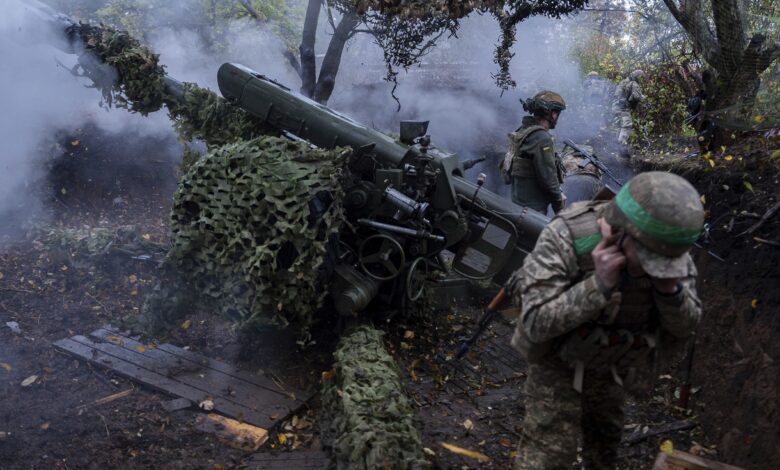
More than $50 million was assigned to weapons, ammunition, military drones, uniforms and personal protective equipment. The remainder was intended for training and strengthening Ukraine’s cyber forces.
The battlefield context
Russia’s full-scale invasion, launched in February 2022, continued to inflict civilian and military casualties and damage critical infrastructure. Ukraine faced another difficult winter as Russia attacked energy facilities and Ukrainian forces confronted pressure along the front.
Military aid was intended to help Ukraine defend its territory and population under the United Nations Charter’s right of self-defence. Individual weapon transfers still required compliance with Canadian export controls, international law and end-use monitoring.
Why ammunition and drones mattered
Modern high-intensity warfare consumes artillery and small-arms ammunition rapidly. Drones support reconnaissance, targeting, communications and, in some configurations, direct attack.
Announced dollar values do not reveal when equipment reaches units or whether it matches battlefield needs. Governments should distinguish commitments, contracts, deliveries and equipment in operational use.
Training and cyber defence
Canada had trained Ukrainian personnel through Operation UNIFIER since 2015, with training moved outside Ukraine after the full-scale invasion. Instruction covered areas such as leadership, combat skills and specialist capabilities alongside allied programmes.
Cyber assistance addressed attacks on government networks, communications and essential services. Cyber support can be less visible than vehicles or ammunition but important to keeping civilian administration and military command functioning.
NATO’s wider effort
NATO Secretary-General Mark Rutte said allies were on track to provide almost $60 billion in security assistance during the year. Ukrainian President Volodymyr Zelenskyy addressed ministers and continued urging coordinated pressure on Russia.
NATO as an organization and individual member states play different roles; national governments decide and fund many transfers. Aggregated alliance figures should not be mistaken for a single NATO-owned weapons programme.
Accountability in Canada
By October 2024, Canada said it had committed more than $19.5 billion in overall support to Ukraine since the invasion, covering military, financial, humanitarian, development and other assistance. Comparing totals requires care because categories and announcement dates differ.
Parliament and the public are entitled to delivery schedules, procurement costs and information about replacement of Canadian stocks, while operational details that could help Russian forces may need protection.
Aid and the pursuit of peace
Supporters argued that sustained assistance was necessary to prevent Russia from benefiting from aggression and to give Ukraine leverage in any negotiation. Critics could legitimately question cost, escalation risk and strategic objectives.
A fair debate begins with accurate figures and recognition that Ukraine is the country invaded. The $64.8-million package was one element of a much larger allied effort; its real value depended on timely delivery, lawful use and a coherent strategy linking defence assistance to a durable peace.