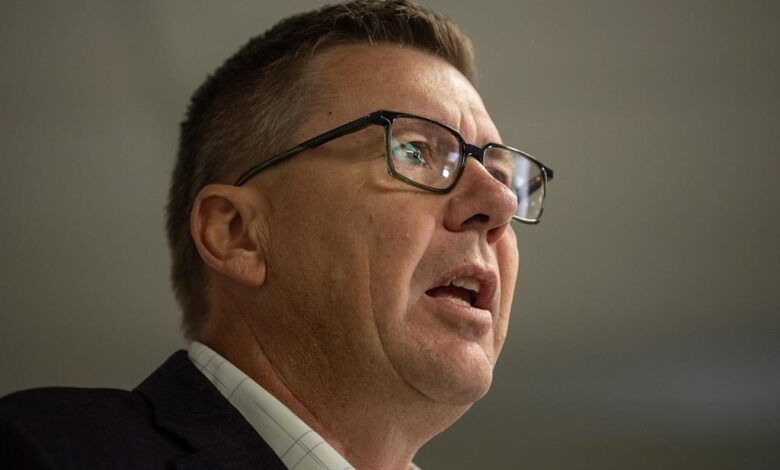
Saskatchewan New Democrats demanded an explanation from Saskatchewan Party leader Scott Moe in October 2024 after a school change-room complaint involving two minors became part of the provincial campaign. The parent of the children was an NDP candidate, making privacy and political responsibility central to the dispute.
A promise not previously in the platform
Moe said his first action after re-election would be a directive preventing what he called “biological boys” from changing with girls. He said the proposal followed a complaint from a southeast Saskatchewan school.
The pledge had not appeared in the Saskatchewan Party’s published platform. Introducing a province-wide rule late in a campaign left limited time to examine the incident, consult students and educators or assess legal and practical consequences.
The identity of the children
The Canadian Press learned that an NDP candidate was the parent of the two children at the centre of the complaint. NDP candidate Nicole Sarauer said children do not consent to the scrutiny that accompanies a parent’s campaign and should not be outed or treated as political targets.
Moe later said minors’ identities should never form part of political debate. That principle requires more than withholding names: public details should not make a child identifiable within a school or community.
Moe’s proposed accommodation
Moe said transgender students should be provided another safe place to change rather than using the girls’ room. A separate private space can help any student who requests privacy, but it can become discriminatory if only transgender students are compelled to use it.
A workable policy needs enough facilities, confidential requests and protection from retaliation. Rural and older schools may not have an unused room conveniently available.
What school divisions said
The division connected with the complaint declined to discuss a specific case in order to protect student safety and privacy. It said its procedures sought safe, welcoming environments consistent with constitutional and human-rights obligations.
Regina Public Schools said students could use facilities matching their gender identity and privately request separate space. Saskatoon Public Schools said individual washrooms and change rooms were available.
The wider political context
The Saskatchewan government had used the notwithstanding clause in 2023 for legislation requiring parental consent when a student under 16 sought to use another name or pronouns at school. The NDP promised repeal.
Sarauer argued voters were more concerned about affordability and health care. Political scientists questioned why the change-room issue suddenly became the announced first priority and noted it could attract social-conservative support while alienating moderates.
Protecting competing privacy needs
Every student should be protected from involuntary exposure, harassment and sexual misconduct. Transgender students also have equality and privacy rights and should not be presumed dangerous because of their identity.
Design measures—private cubicles, curtains, single-user options and supervised conduct rules—can address vulnerability without requiring a public declaration about a child’s body or medical history.
The standard for public leadership
Governments can debate general policy, but officials and parties carry a special duty when the facts concern identifiable children. They should verify claims privately, minimize details and obtain expert legal and educational advice before making an incident a campaign example.
The NDP’s demand for answers was ultimately about that duty. Saskatchewan could review change-room policies without exposing minors or framing one family as a partisan issue. A safe solution would focus on facilities and conduct while preserving the dignity of every child involved.