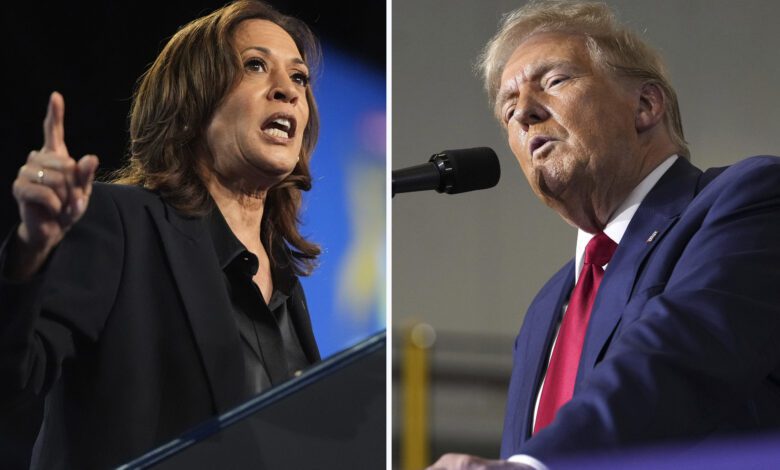
Canada entered the final weeks of the 2024 United States presidential campaign preparing for economic and diplomatic uncertainty under either Republican Donald Trump or Democrat Kamala Harris. The two candidates differed sharply, but both embraced forms of economic nationalism that could affect Canada’s trade-dependent economy.
Why the “elephant” comparison endures
Prime minister Pierre Trudeau told a Washington audience in 1969 that living beside the United States was like sleeping with an elephant: Canada is affected by every movement of its much larger neighbour. The image remains useful because the countries share deeply integrated supply chains, energy systems, security arrangements and the world’s longest international border.
The relationship is not one-sided. Canada is a major customer for U.S. goods and an important supplier of energy, minerals, food and manufactured inputs. Negotiations can still be asymmetric because disruption is usually more damaging to the smaller economy.
The approaching CUSMA review
The Canada-United States-Mexico Agreement required a joint review in 2026. If all three countries confirmed that they wanted the agreement to continue, it could be extended; failure to agree would begin a longer process of annual reviews rather than automatically ending trade overnight.
Canadian officials and businesses therefore needed evidence showing how continental production supports jobs in all three countries. Waiting for a crisis would leave less time to resolve disputes over agriculture, autos, energy, digital trade and rules of origin.
Risks under a Trump victory
Trump campaigned on broad tariffs and a harder “America First” approach. A universal import tariff would raise costs for Canadian exporters and for U.S. manufacturers that use Canadian components, while inviting retaliation and legal challenges.
His first administration had imposed national-security tariffs on Canadian steel and aluminum before negotiating their removal. That record made tariff preparation a concrete concern rather than abstract campaign speculation.
Risks under a Harris victory
Harris was expected to maintain much of the Biden administration’s emphasis on domestic manufacturing, union jobs and clean-energy investment. Those policies were less confrontational in tone but could still divert investment through U.S.-only subsidies and procurement preferences.
Canada had already responded to American industrial incentives with its own support for electric vehicles and batteries. Continued subsidy competition risked spending public money to move investment within North America rather than increasing total productive capacity.
Security, defence and the border
Either administration would expect Canada to contribute more to continental defence and NATO. Arctic surveillance, cyber security, migration, firearms trafficking and the flow of illegal drugs were likely to remain bilateral priorities.
Border policy has immediate economic consequences. Security measures should be intelligence-led and efficient so legitimate travellers and time-sensitive freight are not treated as collateral damage.
Climate and energy differences
A Harris government was expected to continue stronger federal climate policy, creating opportunities for clean electricity, critical minerals and low-carbon technology. Trump promised to expand fossil-fuel production and roll back climate rules, potentially weakening coordinated emissions policy.
Canada sells oil, gas, hydroelectricity and uranium to the United States while also developing batteries and renewable power. A resilient strategy had to prepare for demand and regulation moving in different directions.
Preparation mattered more than preference
Ottawa needed relationships with governors, members of Congress, labour leaders and companies, not only the White House. Many trade decisions are shaped by regional interests that cut across party lines.
Trump ultimately won the 2024 election, but the pre-election analysis remains instructive: Canada faced protectionist pressure under either candidate, with different severity and methods. The safest policy was to diversify trade while defending the integrated North American relationship with facts, contingency plans and sustained diplomacy.