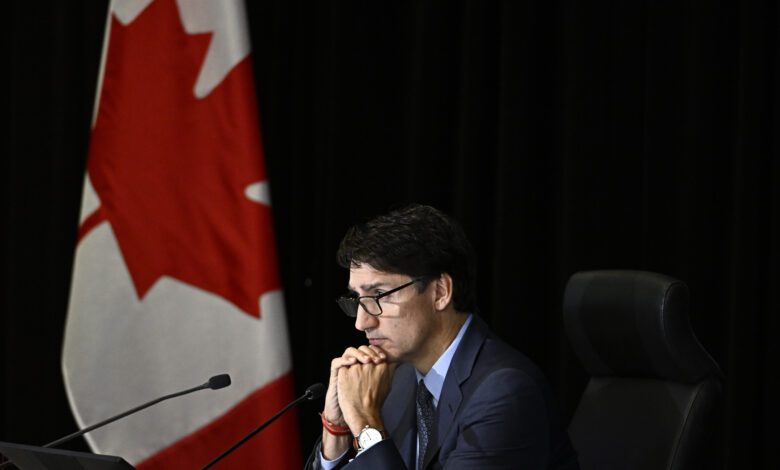
Justin Trudeau’s leadership faced renewed scrutiny as MPs returned to Ottawa in October 2024 after a parliamentary break. A group of Liberal MPs was preparing to confront the prime minister in caucus while the minority government struggled with poor polling and a stalled House of Commons agenda.
An internal challenge
Media reports said several dozen Liberal MPs had discussed asking Trudeau to step aside. The precise support was uncertain because organizing occurred privately and many members did not declare their position.
A caucus challenge can weaken a leader even without a formal removal vote. Public resignations, fundraising problems and candidate recruitment can make internal confidence politically consequential.
Minority government after the NDP agreement
The NDP had ended its supply-and-confidence agreement with the Liberals in September. That did not automatically defeat the government, but it meant the Liberals needed support vote by vote to survive confidence motions.
Conservative leader Pierre Poilievre pushed the opposition to bring down the government, while the Bloc Québécois and NDP could negotiate or oppose measures according to their own priorities.
Parliamentary gridlock
House business had become consumed by a privilege dispute over documents connected with federal spending on green-technology projects. Until the procedural conflict was resolved, much of the government’s legislative programme could not advance.
Gridlock increased pressure on Trudeau because voters could see both weak political support and limited legislative output. Opposition parties also shared responsibility for explaining how their tactics served public accountability.
Why Liberals were worried
Losses in previously safe Toronto and Montreal by-elections challenged assumptions about the party’s urban base. National polls had put the Conservatives ahead for an extended period.
Polls are estimates and by-elections have local dynamics, but repeated adverse results can reveal a pattern that governing parties ignore at their risk.
The caucus meeting
On October 23, 24 MPs delivered a letter urging Trudeau to resign and gave him several days to respond. Ministers defended him, and Trudeau said the party remained united.
He then stated he intended to lead the Liberals into the next election. Because party rules did not give caucus an easy binding removal mechanism, dissent alone could not force an immediate transition.
The later leadership change
Further turmoil followed, including Chrystia Freeland’s December departure from cabinet. Trudeau announced in January 2025 that he would resign once the party chose a successor and asked for Parliament to be prorogued during the contest.
Mark Carney won the leadership in March. That later outcome provides context, but October’s returning Parliament still faced genuine uncertainty about timing and process.
Accountability beyond personalities
A leadership contest can reset communication but does not automatically solve affordability, productivity, housing or confidence in institutions. MPs who wanted change owed voters an explanation of the policy direction they sought.
Trudeau’s leadership was in the spotlight because internal dissent, parliamentary arithmetic and public opinion converged. The democratic test was whether parties used that pressure to clarify choices rather than allowing procedural conflict and private manoeuvring to replace governing.
Canadians ultimately needed verifiable decisions, not endless leadership speculation.