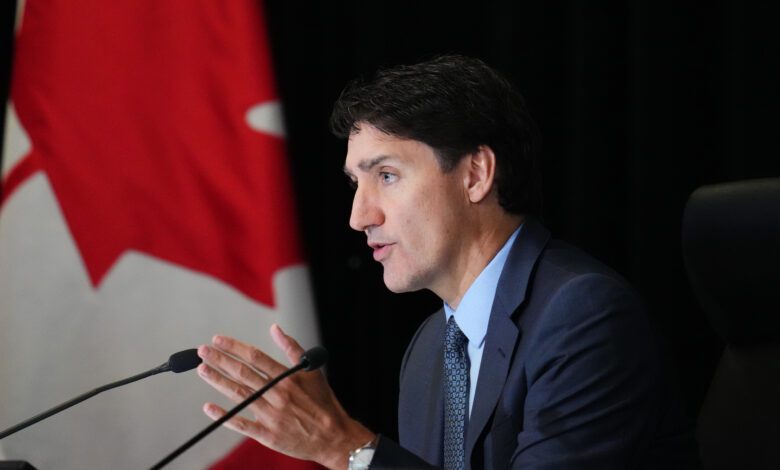
Canadian cabinet ministers publicly rallied behind Prime Minister Justin Trudeau on October 22, 2024 as a group of Liberal MPs prepared to challenge his leadership in caucus. The statements projected executive unity one day before a private meeting expected to expose serious concerns about polling and the party’s future.
Ministers’ public support
Women and Gender Equality Minister Marci Ien said Trudeau had her unequivocal support. Health Minister Mark Holland said the prime minister had led through difficult periods and retained the confidence of most colleagues.
Heritage Minister Pascale St-Onge said cabinet was fully behind Trudeau and should focus on affordability and the next election. Immigration Minister Marc Miller argued that leadership speculation distracted the party from presenting its case against the Conservatives.
What the dissenters were organizing
Reports said up to 30 Liberal MPs had signed an internal document asking Trudeau to step aside. Prince Edward Island MP Sean Casey publicly argued that a change was in the country’s interest because he feared a Conservative government under Pierre Poilievre.
Natural Resources Minister Jonathan Wilkinson disputed that the view represented most of caucus but said it deserved discussion. That response acknowledged a real disagreement without conceding its outcome.
Why pressure had grown
The Liberals had suffered important by-election losses, trailed the Conservatives in national polling and no longer had the NDP’s supply-and-confidence agreement. Several cabinet ministers had also announced they would not seek re-election.
Those facts weakened the appearance of momentum but did not prove that a new leader would reverse it. Governments can lose support because of affordability, policy fatigue and long incumbency as well as a leader’s personal standing.
Cabinet solidarity and political incentives
Ministers serve at the prime minister’s invitation and are expected to support collective decisions publicly or resign. Their endorsements were politically meaningful, yet readers should not treat them as a secret ballot measuring every private view.
Likewise, an anonymous count of dissidents required attribution. MPs who signed privately may have feared retaliation or wanted a candid caucus process, but anonymity limits public scrutiny of their positions.
What happened next
At the October 23 meeting, 24 MPs delivered a letter asking Trudeau to resign and set an October 28 deadline. Trudeau said the party remained united and soon stated he intended to continue as leader.
The challenge did not immediately remove him. He later announced his resignation plan in January 2025, after further political turmoil, and Mark Carney succeeded him in March.
Keeping cause and chronology separate
The later leadership transition confirms that doubts were consequential. It does not prove that the cabinet’s October endorsements were insincere or that the caucus letter alone produced the resignation.
Political positions can change as circumstances change. Responsible reporting dates statements clearly and avoids portraying a later outcome as known to participants months earlier.
The underlying accountability question
Cabinet argued that voters deserved attention to policy rather than internal drama. Dissidents argued that leadership itself affected whether the party could govern effectively and win public confidence.
Both claims can contain truth. The test is whether ministers address public problems while allowing MPs a legitimate forum to question direction. On October 22, cabinet unity was real as a public position; caucus anxiety was equally real as an internal political force.