
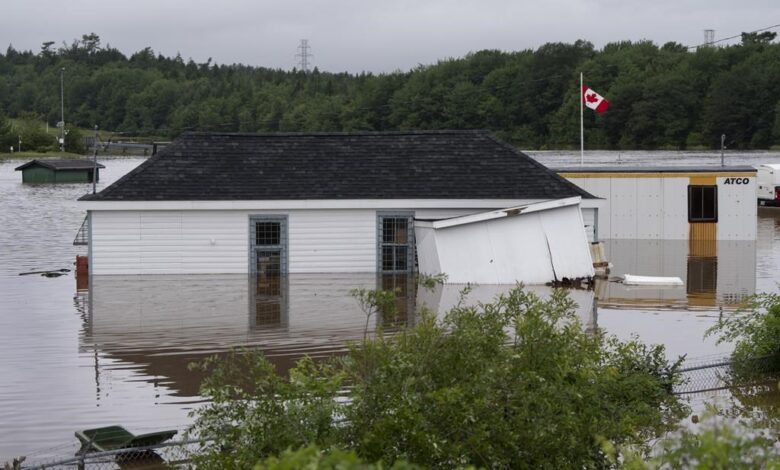
Nova Scotia awarded its Medal of Bravery posthumously to Nicholas Holland in October 2024 for helping three other people escape a taxi swept from a highway during catastrophic flooding. Holland broke the vehicle’s windows as it filled with water, giving everyone inside a chance to get out before he and a 14-year-old passenger were carried away.
The rescue during historic flooding
Holland, 52, was travelling with three other people near Brooklyn on July 22, 2023 when intense rain sent their taxi from Highway 14 into a flooded field. More than 250 millimetres of rain fell in parts of the province, producing fast, dangerous inland flooding.
As water filled the vehicle, Holland smashed windows so its four occupants could escape. His son later said the action gave everyone a chance to survive.
Two lives lost in the current
Holland and 14-year-old Terri-Lynn Keddy were swept away and died. They were among four people killed in the flooding.
A bravery story should not turn a disaster into spectacle. The award recognized Holland’s decision under extreme pressure, while the account must also remember Keddy and the other people whose deaths shaped families and communities.
Nova Scotia’s recognition
Premier Tim Houston presented Holland’s medal to his family during a Halifax ceremony. The provincial Medal of Bravery recognizes people who risk their lives to save or attempt to save others.
A posthumous award cannot compensate a family or reverse the loss. It creates a public record that the recipient acted for others despite immediate personal danger.
Seven other recipients
Nova Scotia recognized eight people in the 2024 ceremony. Three paramedics—Carl Comeau, Carl Deveau and Terrence Leblanc—were honoured for entering a burning home in St. Bernard while attempting a rescue.
Off-duty Truro police officer Bruce Lake received a medal after entering a strong current in New Brunswick’s Fundy National Park to save a young woman. A 13-year-old named Alex was recognized for protecting family members from a dog and calling 911.
Lessons about flood safety
Holland’s actions were extraordinary, but the public should not use the account as an instruction to enter floodwater. Moving water can hide washed-out roads, carry vehicles and increase rapidly. Drivers should obey closures and turn around rather than attempt a flooded route.
Once a vehicle is trapped, conditions change by the second. Emergency agencies’ current guidance, local alerts and instructions from responders should take priority over generalized advice from a news article.
Prevention is also a public duty
Extreme rainfall requires reliable warnings, drainage planning, road barriers and evacuation systems that reach people at night and in rural areas. Governments should publish after-action findings and track whether recommended changes are completed.
Climate change can increase the intensity of heavy precipitation, but attribution of one storm requires scientific analysis. Regardless of attribution, the observed rainfall established a need to plan for severe events.
The meaning of Holland’s medal
Holland was a musician from Ellershouse, a father and a member of his community before he became the subject of a rescue story. Keeping those dimensions visible prevents the circumstances of death from becoming his only identity.
The medal honoured a specific act: in a sinking vehicle, he created a route out for three other people. The enduring response should pair gratitude for that courage with practical work to prevent future travellers from facing the same impossible conditions.



