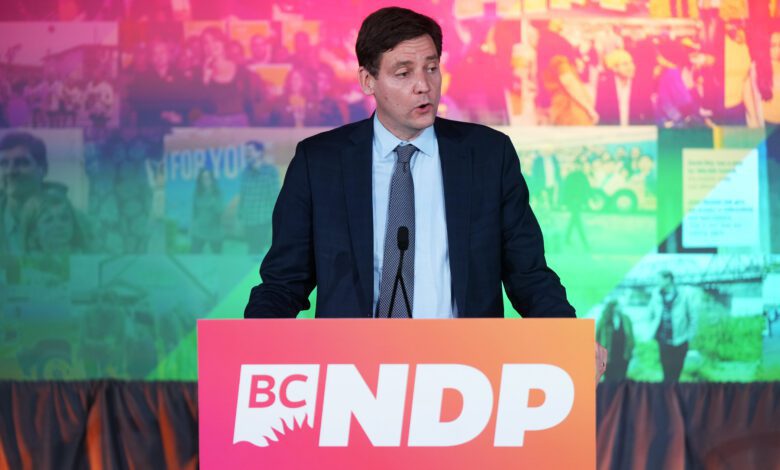
British Columbia Premier David Eby spoke publicly on October 22, 2024 for the first time since an election that remained too close to call. Initial results had the New Democratic Party elected or leading in 46 seats, the Conservatives in 45 and the Greens holding two in the 93-seat legislature.
Why the result remained unsettled
Recounts were required in two close districts, and approximately 49,000 absentee and mail ballots still had to be counted. Initial results provide a timely picture but are not the final legal return when valid ballots remain.
Eby therefore prepared for either a minority or majority legislature rather than claiming a result that election officials had not completed.
Possible role for the Greens
With neither larger party initially at the 47-seat majority threshold, the two Green MLAs appeared able to influence which government could win confidence votes. Eby said the Greens had told the NDP it was too early to begin formal minority-government discussions.
Green leader Sonia Furstenau had lost her own seat but remained leader with the support of elected MLAs Jeremy Valeriote and Rob Botterell. A leader does not need to hold a legislative seat to guide party negotiations, though only elected members can vote in the chamber.
How government formation works
The incumbent premier remains in office while results are finalized and has the first opportunity to demonstrate the confidence of the legislature. Seat counts guide that process, but a minority government survives only while it can pass confidence measures such as budgets.
Private negotiations or a cooperation agreement can provide stability; they are not automatically a coalition with Green ministers in cabinet.
Eby’s message
Eby said his party was organizing to make either a minority or majority parliament work for British Columbians. He indicated the legislature should return once the count was settled but did not announce a date.
The NDP had entered the election with a comfortable majority and lost ground. A commitment to govern needed to be paired with an explanation of what the party had heard from voters.
The Conservative advance
John Rustad’s Conservatives rose from a marginal presence in the previous election to the brink of power after BC United suspended its campaign. Rustad said on election night that his party would seek an opportunity to defeat an NDP minority.
Opposition has a legitimate role in testing confidence and scrutinizing government, but repeated election threats can also affect stability. Voters needed clarity about policy as well as parliamentary tactics.
The final count
Elections BC completed the final count with the NDP winning 47 seats, the Conservatives 44 and the Greens two. Later judicial recounts did not change that distribution, allowing the NDP to form the narrowest possible majority in the 93-seat assembly.
The final result should not be projected backward into Eby’s October 22 news conference. At that time, uncertainty was real and officials still had ballots to count.
A test of democratic patience
Close elections require parties and the public to let the statutory count proceed. Unsupported allegations of fraud can harm confidence, while transparent updates and observable recount procedures strengthen it.
Eby’s first post-election appearance mattered because he acknowledged multiple constitutional possibilities. The lasting outcome came from verified ballots: a 47–44–2 legislature and a government with little room for absence, dissent or complacency.