
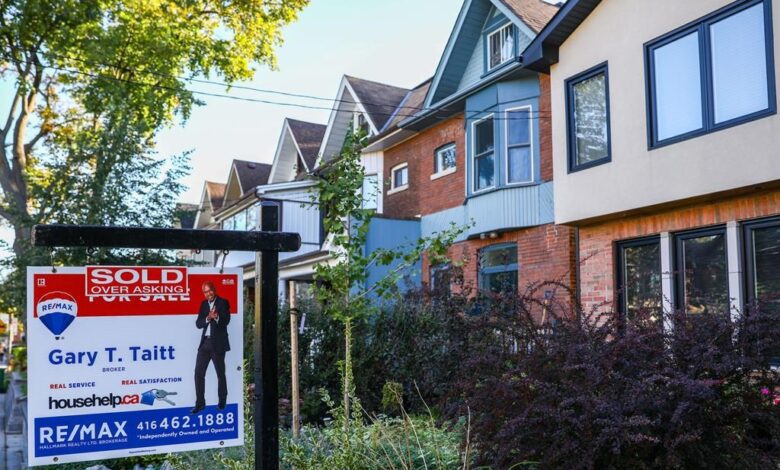
Greater Toronto Area home sales rose sharply in October 2024 as lower borrowing costs encouraged more buyers to return. The Toronto Regional Real Estate Board recorded 6,658 sales, 44.4 per cent more than the 4,611 transactions completed in October 2023.
Sales recovered faster than prices
Transactions increased 14 per cent from September on a seasonally adjusted basis. The average selling price was $1,135,215, up 1.1 per cent year over year, while the composite benchmark price intended to represent a typical home fell 3.3 per cent.
The difference between average and benchmark measures is important. An average can rise when more expensive properties make up a larger share of sales, even if the estimated value of a comparable typical home declines.
Interest-rate cuts changed monthly payments
The Bank of Canada had reduced its policy rate four times since June, including a half-percentage-point cut on October 23, bringing it to 3.75 per cent from a five per cent peak. Mortgage rates do not move identically with the policy rate, but lower funding costs improved qualification and expected payments for some buyers.
Board president Jennifer Pearce said the combination of lower borrowing costs and relatively flat prices brought people off the sidelines. That interpretation came from an industry association and should be considered alongside independent economic and lending data.
Activity by location and property type
The City of Toronto recorded 2,509 sales, a 37.6 per cent annual increase. The rest of the GTA recorded 4,149, up 48.9 per cent. All major property categories had more transactions.
Townhouses led with a 56.8 per cent increase, followed by detached houses at 46.6 per cent, semi-detached homes at 44 per cent and condominiums at 33.4 per cent. Percentage growth does not show the absolute availability or affordability of any category.
Buyers still had inventory
New listings totalled 15,328, 4.3 per cent more than a year earlier. TRREB analyst Jason Mercer said conditions tightened but buyers retained substantial choice, which could moderate near-term price growth.
Inventory can absorb increased demand before prices accelerate. The effect varies by neighbourhood and housing type, and a listing is not necessarily affordable to a household entering the market.
Why a rebound was not an affordability solution
Lower rates reduce financing costs but can also support higher prices if demand grows faster than supply. A household must consider the down payment, property tax, insurance, condominium fees, maintenance and the possibility of renewal at another rate.
Prospective buyers should use a budget with room for shocks rather than purchase because one month’s sales surged. Sellers should rely on comparable local properties, not the region-wide average. General market data is not individualized financial advice.
Reading the October result accurately
The month provided evidence that rate cuts released some deferred demand. It did not prove that every buyer could afford a home or that prices would immediately climb. Later 2024 data showed the year remained transitional, with new listings growing faster than sales overall.
A sound assessment tracks several months of seasonally adjusted sales, inventory, price measures, construction and household income. October was a strong change in activity; whether it became a durable recovery depended on financing, employment and supply well beyond one board report.



