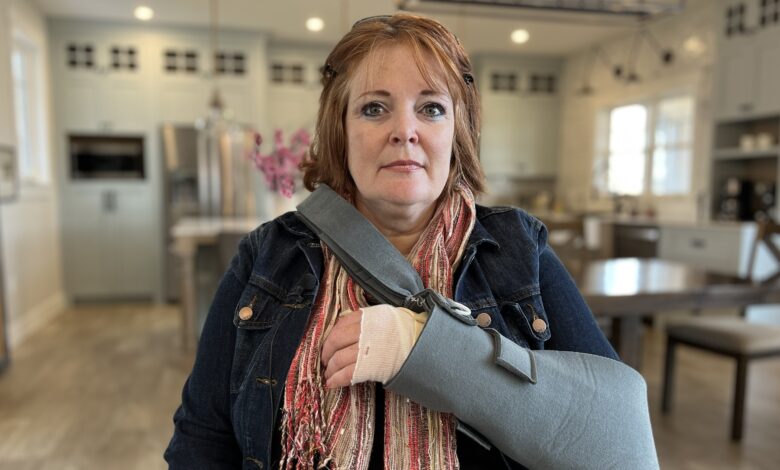
Nova Scotia music teacher Andrea Ritcey waited 12 days for surgery after a shattered glass jar severed an artery, nerve and muscle in her hand during the 2024 Thanksgiving weekend. She had been told that treatment within approximately 72 hours would be ideal and described the delay as painful, frightening and dangerous.
A serious injury and repeated delay
Ritcey was preparing to host more than a dozen people when a mason jar broke in her hand. The cut extended near the webbing of the hand and required specialist repair. As a guitarist and music teacher, function in the injured hand was closely connected to her work as well as daily life.
She was also recovering from stage 3 endometrial cancer after chemotherapy and radiation. That history intensified the emotional impact of another urgent medical problem and made the long wait especially distressing.
Why timing matters in hand injuries
Nerve, tendon, muscle and blood-vessel injuries are not interchangeable, and the appropriate surgical window depends on circulation, contamination, tissue damage and specialist assessment. The reported 72-hour goal described advice in Ritcey’s case, not a universal deadline for every hand injury.
A news article cannot determine whether a particular delay caused permanent harm. That requires examination and follow-up by qualified clinicians. It can accurately report the timing, symptoms and concerns raised by the patient.
The health authority’s response
Nova Scotia Health said privacy rules prevented comment on an individual case and stated that its goal was to provide the best possible care. A general assurance did not answer what capacity or scheduling failure produced the 12-day wait.
Health systems can protect confidentiality while publishing aggregate data on urgent-surgery waits, cancellations, staffing, transfers and adverse outcomes. That evidence helps distinguish an exceptional event from a recurring access problem.
The cost of postponed surgery
Delay is not only time on a waiting list. A patient may endure uncontrolled pain, repeated travel, lost work and uncertainty about recovery. Families provide transport and care, while clinicians spend time reassessing a condition that remains untreated.
For a musician, loss of fine movement can threaten identity and income. Rehabilitation, occupational therapy and mental-health support may be needed after the operation as well as the surgical procedure itself.
What safer access would require
Health authorities can maintain regional on-call coverage, clear escalation criteria and transfer agreements for time-sensitive specialist cases. Patients need one accountable contact, written instructions about warning signs and realistic updates when schedules change.
Governments should report whether shortages involve operating rooms, surgeons, anesthesiology, nursing, beds or coordination. Adding money without identifying the bottleneck can fail to improve access.
How readers should use this story
Ritcey’s experience is evidence of one serious delay, not a diagnosis of every part of Nova Scotia health care. Her description of the system as dangerous was a patient’s conclusion grounded in what happened to her and should remain attributed.
Anyone with a deep cut, loss of feeling, impaired movement, uncontrolled bleeding or signs of infection should seek urgent medical assessment rather than use an article to decide that care can wait.
The public-interest question is what the system learned. A transparent review could establish why an urgent specialist procedure was postponed and whether similar patients faced the same risk. Ritcey’s story made the human consequences visible; accountability requires data and corrective action beyond an apology or general statement.