
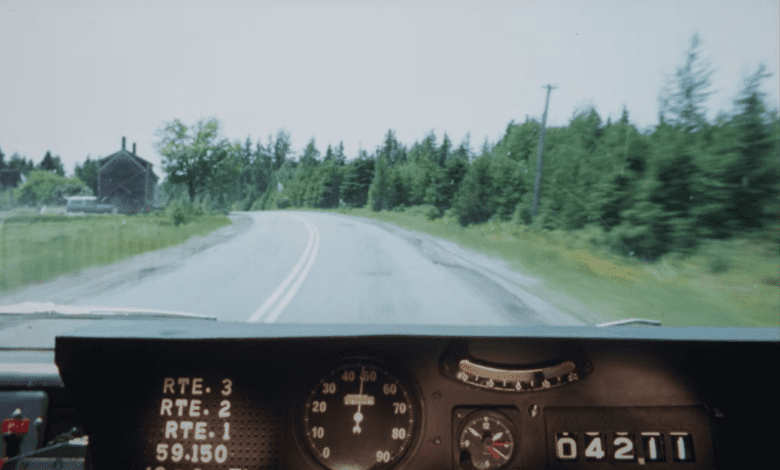
Road-survey films recorded across New Brunswick between 1969 and 1975 found an unexpected second life online in 2024. Provincial archivist Rob Gemell began sharing the footage, and residents responded with screenshots, memories and identifications of places that had changed or disappeared.
Why the films were made
The provincial government originally used the recordings to support road maintenance. Instead of sending staff on a long trip whenever officials needed to inspect a route, they could review film for an initial view of its condition. The footage was an economical working record, not a travel documentary created for future audiences.
That practical purpose makes the images historically valuable. A camera aimed at a roadway also captured buildings, vehicles, signs, businesses, landscapes and patterns of development that formal promotional films might omit.
Nostalgia turned into evidence
Gemell said he did not expect a large audience when he uploaded the films to YouTube. New Brunswickers began circulating frames in local Facebook groups, where people recognized former stores, family routes and older versions of their communities. The response transformed anonymous infrastructure footage into a crowdsourced map of memory.
Personal recollections can enrich an archive, but they should be labelled as recollections. A person may remember a building’s name or year incorrectly. Archivists can compare comments with maps, directories, newspapers and government records before adding a permanent description.
What moving images preserve
A still photograph isolates a place. A road film preserves sequence: how far homes stood from the highway, where a commercial strip began, how signs directed drivers and what the approach to a bridge or town looked like. Researchers can study transportation, planning, architecture and environmental change within the same source.
The images can also reveal what official record-keeping overlooked, including small businesses, rural settlements and everyday travel. Their value increases when route numbers, direction of travel, filming dates and original technical details are documented.
Digitization is more than uploading
Old film can shrink, scratch, fade or become brittle. Preservation normally includes inspecting the physical reel, creating a high-quality archival scan, storing an uncompressed master and generating smaller public copies. The original should remain safely housed even after digitization.
Online platforms make footage easy to find but are not permanent archives. Accounts can be removed, compression reduces quality and links can change. The provincial archive therefore remains responsible for durable storage, file checks, backups and descriptive metadata.
Inviting the public to help responsibly
Hundreds of videos were still awaiting review when Gemell discussed the project. Residents can help by supplying precise timestamps, spellings and sources for an identification. Archivists can preserve those contributions while moderating personal information or unsupported claims.
Public access should also include captions or transcripts where speech exists and enough context for people unfamiliar with the region. Clear rights information tells teachers, researchers and filmmakers whether and how they may reuse a clip.
The popularity of the New Brunswick road films was not only sentimentality. It showed how records created for routine administration can become irreplaceable social history. A highway department documented pavement; decades later, residents saw vanished neighbourhood details and pieces of their own lives.
By pairing professional preservation with community knowledge, the archive can turn a viral moment into a dependable historical resource. The road trips remain engaging because viewers recognize change, but their lasting value comes from keeping the film, its context and the public’s identifications together.



