
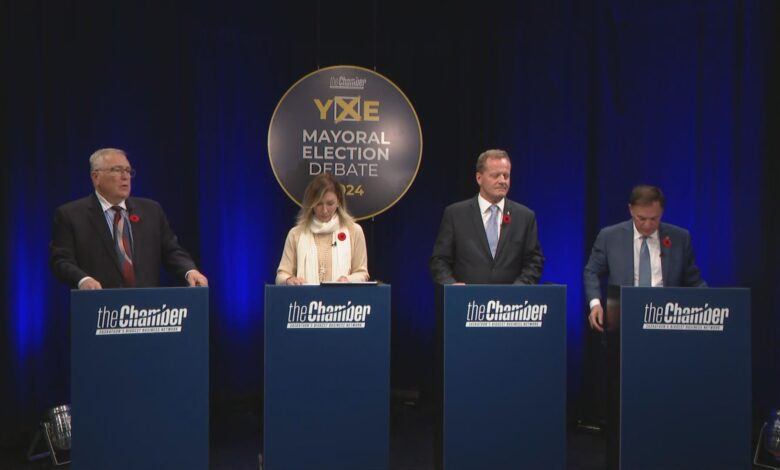
Five candidates contested Saskatoon’s mayoral election on November 13, 2024: former mayor Don Atchison, councillor Cynthia Block, Mike Harder, Cary Tarasoff and former provincial cabinet minister Gordon Wyant. The field offered voters contrasting records and priorities at a time when housing, public safety, transit and municipal finances were prominent concerns.
Don Atchison
Atchison served as mayor from 2003 to 2016, making him the city’s longest-serving mayor, and later lost bids in 2016 and 2020. He returned with an emphasis on practical administration, public safety and fiscal control. His long record gave voters evidence to examine as well as campaign promises.
Cynthia Block
Block had represented Ward 6 for eight years and had previously worked as a television journalist. She had also run federally for the Liberals in 2015. Her mayoral campaign highlighted housing, transit, roads and environmental planning. Because she was a sitting councillor, voters could compare those themes with her votes and committee work.
Mike Harder
Harder described an unconventional political position using both libertarian and authoritarian language and argued against tax increases. A pledge to hold taxes should be tested against the cost of maintaining infrastructure and services. Municipal budgets must balance, so a revenue limit normally requires corresponding efficiencies, alternative fees or delayed spending.
Cary Tarasoff
Tarasoff brought experience in farming and the military and had finished fourth in the 2020 mayoral election with 2,650 votes. His 2024 campaign drew attention to homelessness and safety on public transit. Those subjects overlap but require distinct responses, including housing, health services, emergency intervention and transit operations.
Gordon Wyant
Wyant had served on Saskatoon city council for Ward 5 before becoming a Saskatchewan Party member of the legislature. Over approximately 14 years in provincial politics, he held cabinet portfolios that included justice, education and advanced education. His experience connected municipal concerns with provincial powers, although the two levels have different responsibilities.
What the mayor could actually change
A Saskatoon mayor chairs meetings, represents the city and can set a public agenda, but does not govern alone. Budgets, bylaws and major projects require council decisions. Candidate promises therefore needed to explain which councillors, provincial approvals, partnerships or new revenue would be required.
Housing illustrated that shared authority. City zoning and permitting affect what can be built, while provincial and federal governments control other funding, taxation and social programmes. Public safety similarly involves police, community services, health care and courts.
The result
Cynthia Block won the election with 30,412 votes, or 44.7 per cent of ballots cast, becoming Saskatoon’s first woman mayor. Adding the result is important because an election preview remains accessible after voting day and should not leave readers with an unresolved contest.
The result did not retrospectively make the other candidates’ concerns irrelevant. Their proposals reflected pressures the successful council still had to address. Nor did a plurality victory mean that every voter endorsed every item in Block’s platform.
How to read an archived candidate guide
A fair guide distinguishes biography, stated policy and verified result. It does not infer competence from a job title or treat every campaign claim as an accomplished fact. Readers can consult the city’s official election record for totals and council minutes for what followed.
Saskatoon voters chose a new mayor after considering five very different candidates. The durable public-interest question is how the elected mayor and council translate campaign priorities into costed, lawful decisions—and whether residents can measure the outcome through housing supply, service reliability, safety and transparent finances.



