
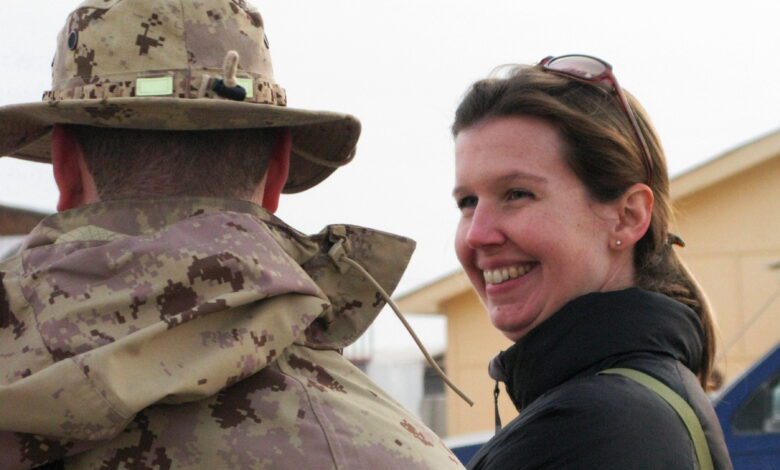
A new book remembered Canadian journalist Michelle Lang and examined the consequences of her death while reporting from Afghanistan. Lang, a Calgary Herald and Canwest reporter, was 34 when a roadside bomb killed her and four Canadian soldiers on December 30, 2009, during a six-week assignment embedded with Canadian forces.
A journalist killed while documenting a war
Lang became the first—and remains the only—Canadian journalist killed during Canada’s Afghanistan war. Her death belongs in the record alongside those of the service members and Afghan civilians whose lives were lost, while recognizing that journalists have a distinct civilian role: independently informing the public about decisions made in its name.
Embedding gives reporters access to troops, operations and daily conditions that may otherwise be impossible to observe. It also constrains movement and can shape perspective. Responsible war coverage supplements an embed with civilian voices, official records and independent verification whenever circumstances permit.
The book and its author
Michelle’s aunt, Catherine Lang, wrote Embedded: The Irreconcilable Nature of War, Loss and Consequence. The title connects a reporter’s physical presence with the way bereavement remains embedded in a family. It approaches the war not as an abstract policy dispute but through what violence left behind.
Catherine linked her grief to Afghanistan’s later history, including the Taliban’s return to power in 2021 and severe restrictions imposed on women and girls. Those developments can intensify questions among families about what military and civilian sacrifices achieved. The questions do not have to be answered with either simple triumph or simple futility.
Remembering the person beyond the death
Accounts of killed journalists can become dominated by the final assignment. A fuller remembrance includes Lang’s professional work before Afghanistan, her relationships and the judgment involved in accepting an overseas posting. Her death was news; her life was more than the event that ended it.
The book also provides a family perspective rather than claiming to be a definitive military history. Memoir can convey emotion and personal knowledge that an official chronology cannot. Readers should distinguish remembered experience from independently documented operational fact while valuing both forms of evidence.
Why journalist safety matters
Conflict reporters accept heightened risk, but danger should not be romanticized as a qualification. News organizations have responsibilities for training, protective equipment, insurance, communications, trauma support and security decisions. Editors must also consider local journalists and fixers, who may face sustained danger after visiting correspondents leave.
Public access to reliable reporting depends on those protections. When a journalist is killed, the loss reaches beyond one newsroom because fewer independent witnesses remain to question governments, armed forces and other parties to a conflict.
A legacy connected to education
Ten per cent of royalties from Catherine Lang’s book were designated for Right to Learn Afghanistan, an organisation supporting educational access. The arrangement linked remembrance with a practical response to the restrictions facing Afghan learners. Prospective donors should still review the organisation’s current programme and reporting before contributing.
Fifteen years after the bombing, the book asked readers to hold several truths together: Michelle Lang was a skilled reporter, her family’s loss continued, Canada’s Afghanistan mission remained contested and Afghans still lived with the consequences. Preserving that complexity is more faithful than turning her into a symbol for only one argument.
Lang’s work and Catherine’s account both insist on attention. One documented a war for distant readers; the other documented what came home when the reporter did not. Together they make remembrance an act of inquiry as well as mourning.



