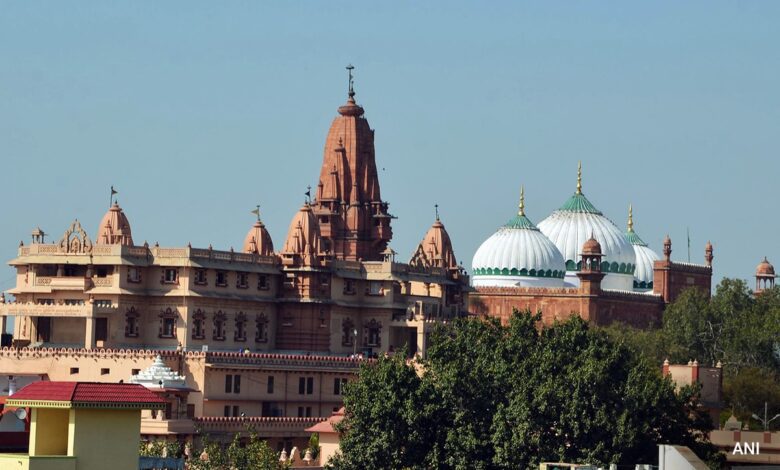
India’s Supreme Court agreed in September 2024 to hear a challenge by the management committee of Mathura’s Shahi Idgah mosque concerning litigation over the Krishna Janmabhoomi site. The dispute involved civil suits claiming that the mosque stood on land associated with the birthplace of the Hindu deity Krishna.
The petition concerned procedural decisions
The mosque committee challenged orders affecting how the related suits would proceed in the Allahabad High Court. Supreme Court consideration did not decide ownership, historical claims or the final status of the religious structures.
Hearing a plea means examining legal questions, not endorsing the applicant’s position.
Multiple suits had been consolidated
Petitioners sought removal of the mosque and possession or worship rights over the disputed area adjoining the Shri Krishna Janmasthan temple complex. The High Court took up several related cases to manage overlapping facts and remedies.
Consolidation can improve consistency while preserving each party’s arguments.
The mosque committee raised maintainability
Its objections included whether the suits were barred by limitation, the Places of Worship Act and other legal doctrines. These threshold issues ask whether a court can hear claims even before resolving historical evidence.
A ruling on maintainability can shape the case without establishing a religious narrative as fact.
The Places of Worship Act was central
The 1991 law generally preserves the religious character of places of worship as it existed on August 15, 1947, subject to specified exceptions. Its purpose was to limit new disputes over historical conversion of sites.
How the statute applied in Mathura was contested and required judicial interpretation.
The case differed from Ayodhya
Ayodhya litigation had an explicit statutory exception and a distinct evidentiary history. Treating its 2019 judgment as an automatic template for every temple-mosque claim would ignore the 1991 law and facts of each site.
Courts must decide the actual pleadings before them.
Survey requests raised further conflict
Some Hindu petitioners sought inspection of the mosque complex. The committee opposed measures it believed would prejudge or disturb the site.
Any evidentiary process needed clear scope, preservation rules and respect for ongoing worship.
Public commentary required restraint
Claims about medieval events, ownership and religious identity can inflame communal tension when presented as settled before trial. Political speeches or viral videos are not substitutes for admissible records and reasoned judgments.
Journalists should state who alleges each proposition and what a particular order actually decides.
Access to court is not a licence for intimidation
Litigants, worshippers, lawyers and judges must be able to participate safely. Threats or attempts to alter the property outside lawful process undermine both religious freedom and the rule of law.
Peaceful disagreement remains possible while appeals proceed.
The Supreme Court’s role was initially narrow
The justices were asked to review legal management of the dispute, not declare a winner from the bench at the first listing. Further notices, responses and hearings could follow.
The accurate headline was therefore procedural: the court would hear the mosque committee’s plea. The deeper land and worship questions remained contested, and any legitimate outcome required evidence, statutory analysis and protection of public order rather than triumphalist assumptions.