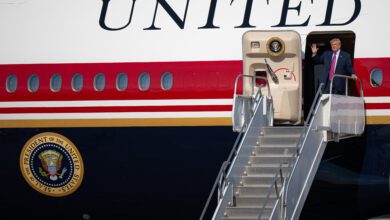
Quebec Separatists Delay Independence Referendum Until After Trump Leaves Office

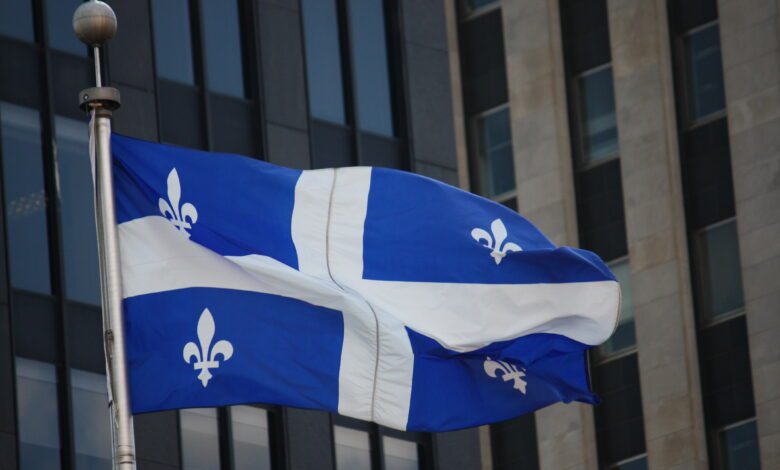
The leader of Quebec’s main separatist party says he would not hold a referendum on independence while Donald Trump remains president of the United States, pushing any possible vote to at least January 20, 2029. The pledge adds a new condition to the Parti Québécois plan to seek a public mandate for Quebec sovereignty.
Paul St-Pierre Plamondon said Quebec should avoid making a decision of that scale while Canada faces unusually aggressive pressure from Washington. Trump’s tariffs and repeated suggestions that Canada should become the 51st US state have strengthened Canadian nationalism, including among many voters who remain proud of Quebec’s distinct identity.
A change in timing, not in the party’s goal
The Parti Québécois remains committed to independence. Its new position concerns when a referendum would be held if the party returns to power, not whether it still supports one. The next provincial election must take place by October 5, and current political conditions have made the party a serious contender despite its present opposition status.
Under the pledge, even a strong election result would not produce an immediate sovereignty vote. The earliest date would come after Trump’s current term, giving a new Quebec government time to legislate, negotiate and try to build public support.
The delay is also an acknowledgement that referendum campaigns are shaped by external events. A confrontation with the United States could make federal institutions and the Canadian market appear more valuable to voters who might otherwise consider independence.
Support for sovereignty remains limited
Recent measures place support for Quebec independence at roughly 30%, well below the level normally needed to justify confidence in a referendum victory. Voters have rejected sovereignty twice. The 1995 contest was exceptionally close, leaving the issue embedded in the province’s political memory.
Quebec nationalism has never been identical to support for separation. Many residents favour strong French-language protections, greater provincial authority and recognition of Quebec as a nation while choosing to remain within Canada. A successful independence campaign would have to persuade a substantial number of those voters that sovereignty offers more security than federalism.
Trump changes the political calculation
US tariff policy affects industries across Canada and can be particularly important in Quebec’s aluminium, aerospace, manufacturing and agricultural sectors. Threats to Canada’s territorial or political status, even when dismissed as rhetoric, create a shared national response that crosses provincial and linguistic lines.
For separatists, that environment is difficult. A campaign centred on leaving Canada could be portrayed as increasing uncertainty at the moment a larger neighbour is applying economic and political pressure. Waiting allows the Parti Québécois to argue that Quebec should make its decision under more stable international conditions.
The strategy is not without risk. Political momentum can fade, public priorities can change and delaying a central promise may disappoint activists. Rivals will also question whether the party would find another reason to postpone a vote after 2029.
Major questions would remain after any vote
A future referendum would reopen complex issues involving currency, debt, pensions, trade, citizenship, Indigenous rights and the border with the rest of Canada. Quebec’s economic relationship with the United States would also require careful planning, especially if cross-border trade rules remain unpredictable.
The wording of the question and the threshold for a clear result would matter. The narrow 1995 outcome led to years of legal and political debate over what would constitute an unambiguous mandate and how negotiations on separation should proceed.
A Canadian issue shaped by Washington
The pledge shows how deeply US politics can influence decisions inside Canada even without formal involvement. Trump has not ended the Quebec sovereignty movement, but his approach has changed the setting in which separatists must make their case.
Between now and the provincial election, the Parti Québécois will need to persuade voters that delaying a referendum is prudent rather than evasive. It must also explain how an independent Quebec would manage the same US pressure that now makes the party reluctant to hold a vote.
No referendum is currently scheduled, and the party must first win power. The immediate consequence is therefore political clarity: Quebec separatists are asking voters to support their programme while accepting that the movement’s defining decision would wait until after the present US presidency.