Grand Canyon flood closures: what changes for hotels, hiking and river trips

GRAND CANYON, August 31 — Visitors to Grand Canyon National Park face separate restrictions on overnight accommodation, inner-canyon hiking and river travel after the August 29 flash flood damaged bridges and water infrastructure. The changes do not amount to an announcement that the entire park is closed.
The National Park Service’s August 30 notice schedules Stage 4 South Rim water restrictions from noon on August 31, local Arizona time. The Transcanyon Waterline was out of operation, leaving limited reserves.
Hotels and camping
Park concessions are to halt overnight accommodation from Monday. The notice names El Tovar, Bright Angel Lodge, Maswik Lodge, Phantom Ranch, Yavapai Lodge and Trailer Village among the affected facilities. Hotels outside the park in Tusayan are not covered by these operational changes.
South Rim camping is restricted to dry camping. Campground spigots are to be shut off, with water available at the Mather Campground check-in kiosk and bathroom faucets remaining operational. Wood and charcoal fires are prohibited on the South Rim and in the inner canyon.
Day visits are a different category
The park is to remain open for day use. South Rim food and beverage services, the clinic and the post office are listed as remaining open, although some hours may be reduced. A day-use opening does not override a trail closure or guarantee that an overnight reservation can be honoured.
Inner-canyon routes and river traffic
A separate NPS notice closes Phantom Ranch, its canteen and cabins, Bright Angel Campground, and the North Kaibab Trail from its trailhead to Phantom Ranch until further notice. Black Bridge and Silver Bridge across the Colorado River are also listed as closed.
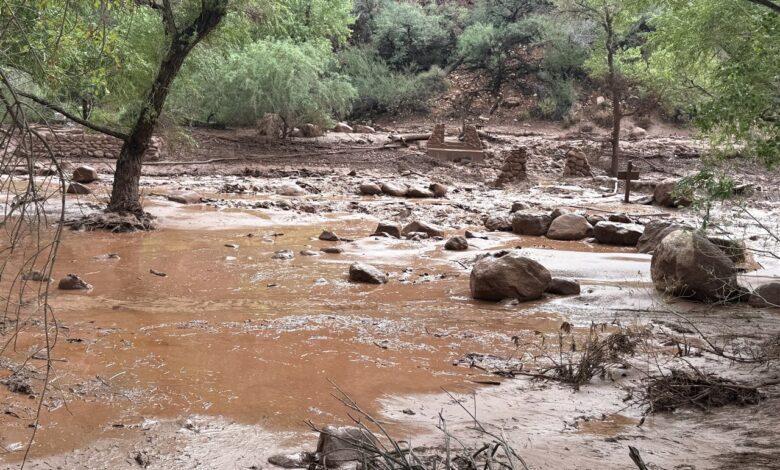
The flood destroyed nearly all footbridges across Bright Angel Creek. The Colorado River was closed to river traffic because debris and metal structures had entered the channel, with no reopening date provided in that notice.
Parties already on the river are receiving instructions through park rangers and the Grand Canyon River Alert system. People with upcoming trips should contact their commercial outfitter or NPS River Permits for a trip-specific decision.
Before setting out
Check the accommodation and water notice and the trail and river closure notice, then reconfirm directly with the operator. Older route descriptions may not reflect the flood damage. This service update reflects notices checked on August 31; it is not a continuously maintained live closure feed.
Why the restrictions were separated
The South Rim water action was designed to conserve limited reserves after damage to the Transcanyon Waterline. Closing overnight lodging and turning off campground spigots reduces sustained demand while allowing a narrower set of day services to operate. That distinction explains how the park could remain open for day use while accommodation reservations inside the park were interrupted.
The inner-canyon closures addressed a different hazard. Destroyed footbridges, debris in the Colorado River and damage around Phantom Ranch affect route continuity and emergency access, not merely visitor convenience. A trail that appears passable at one end may no longer provide a safe or lawful connection through the canyon.
Planning after a fast-changing event
Visitors should separate three questions: whether the park entrance is open, whether a particular trail or river segment is open, and whether an overnight booking can be honoured. Confirmation of one does not answer the other two. River parties need instructions specific to their permit or outfitter, while hikers need the current NPS closure list rather than an older map or itinerary.
This article records the National Park Service notices issued after the August 29 flood. Conditions, repairs and water rules can change after publication. The official park alerts and direct communication from a concessioner, permit office or commercial outfitter should control any travel decision made later.
Current-event photograph: damaged footbridge supports along Bright Angel Creek after the 29 August 2026 flash flood, released by the National Park Service. Photo: NPS/J. Thompson, official source. Resized for web delivery; scene unchanged.