UN says 1.5°C warming overshoot is now unavoidable: what that means

NAIROBI, September 2 — The world is now widely assessed to be heading beyond 1.5°C of long-term global warming, according to a new United Nations Environment Programme report that shifts the climate question from whether an overshoot can be avoided to how high temperatures peak, how long they remain elevated and whether they can later be brought down.
The 1.5°C figure is measured against the pre-industrial climate and refers to a long-term global average. It is not a weather forecast, and a single year above 1.5°C is not identical to permanently crossing the Paris Agreement’s temperature limit.
What the report says
UNEP’s Limiting Overshoot report evaluates pathways in which warming exceeds 1.5°C, reaches a peak and then declines. Its most optimistic scenario peaks near 1.8°C around mid-century. Policies currently in force point closer to 2.6°C by 2100, while other pathways vary with future action.
The conclusion is not that every outcome is now the same. Higher peaks and longer periods above 1.5°C expose more people and ecosystems to dangerous heat, flood, drought, sea-level and food-security impacts. They also increase the chance of crossing thresholds that cannot be easily reversed, including major ice-sheet destabilisation and ecosystem loss.
Why returning is difficult
Temperatures can decline only after the world reaches net-zero carbon dioxide emissions and then removes more carbon dioxide from the atmosphere than it adds. UNEP describes carefully governed carbon-dioxide removal — including biological and engineered methods — as part of that longer-term task.
Removal is not a substitute for reducing fossil-fuel and methane emissions now. Delaying cuts raises the peak, increases the quantity that would later need to be removed and leaves communities exposed for longer. Some losses, such as species extinction or portions of sea-level rise, cannot simply be undone when the temperature curve turns downward.
Adaptation and mitigation must run together
Flood defences, heat-health plans, resilient power and water systems, early warnings and safer land-use decisions can reduce harm. Adaptation nevertheless has physical and financial limits, particularly for small island states, low-lying cities and poorer communities.
At the same time, faster clean-energy deployment, energy efficiency and methane reductions can limit additional warming while improving air quality and reducing fuel exposure. The report argues that these actions must proceed together rather than placing near-term protection and long-term emissions cuts in competition.
An “overshoot” should therefore not be described as permission to abandon 1.5°C. It is a warning that each fraction of a degree and each year above the limit changes the number of lives, livelihoods and ecosystems placed at risk. The remaining policy choice is still consequential: minimise the overshoot and build the capacity to survive it, or allow a higher and longer period of damage.
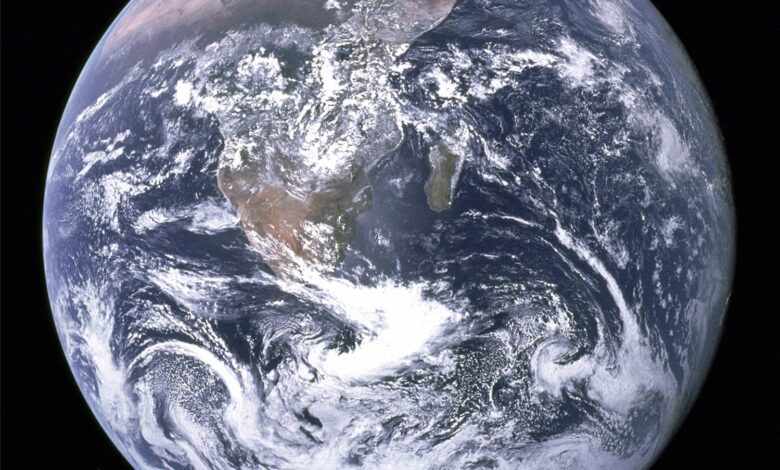
Earth photographed from Apollo 17 in December 1972. Image: NASA, Wikimedia Commons, public domain.