Semaglutide treatment begun late in life extended median lifespan and improved several measures of function in older female mice, according to an NIH-funded study published in Nature.
Researchers treated healthy 20-month-old female mice, an age intended to model later life, and compared the results with untreated animals and a calorie-restricted group. After three months, treated mice showed improvements in muscle and cognitive measures and changes in gene activity associated with ageing.
The lifespan finding
In a cohort followed for the remainder of life, median lifespan was nearly 100 days longer in the semaglutide group. The study also reported some memory and blood-sugar benefits beyond those seen with a 24% calorie restriction over five months, while metabolic rate did not change in the same way as it did under calorie restriction.
Why readers should not extrapolate to people
The experiment involved one species, one sex and controlled laboratory conditions. A longer median lifespan in mice does not establish that semaglutide delays human ageing, benefits healthy people without an approved indication or has a favourable long-term risk-benefit balance for longevity use.
Semaglutide is a prescription medicine with recognised indications and potential adverse effects. People should not start, increase or obtain it for anti-ageing purposes based on an animal study. Human evidence would require well-designed trials with appropriate endpoints and follow-up.
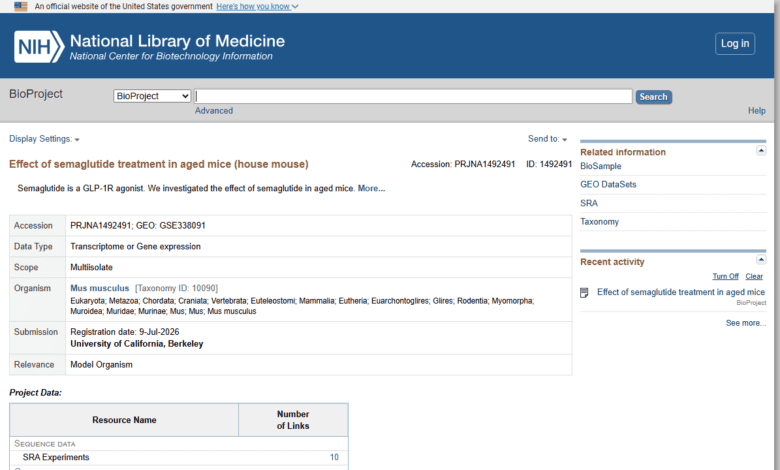
The public NCBI BioProject record confirms the 20-month-old female mouse design and links the underlying liver RNA-sequencing data, improving transparency for independent analysis.
Sources: NIH research summary; peer-reviewed Nature paper; NCBI BioProject record.
Public study data record. Screenshot: NCBI.