

The World Health Organization has validated Bhutan’s elimination of dog-transmitted human rabies as a public-health problem, making it the first country in the WHO South-East Asia Region to achieve the designation.
Bhutan has maintained zero human deaths from dog-mediated rabies since June 2023. WHO’s decision followed a review of the national dossier and a field mission from August 17 to 22, including visits to health facilities and laboratories, examination of records and information systems, and checks in the Bhutan–India border area.
What “elimination” means here
The validation does not mean every rabies virus has disappeared or that dog bites no longer require urgent care. WHO’s criteria recognise the absence of human deaths caused by infected dogs for at least two years, backed by surveillance, laboratory diagnosis, animal vaccination, access to post-exposure treatment and the capacity to stop reintroduction.
Rabies is almost always fatal after clinical symptoms begin, but timely post-exposure prophylaxis can prevent disease. Immediate wound washing, a course of rabies vaccine and, where indicated, rabies immunoglobulin remain essential after a potentially infectious bite or scratch.
A One Health programme across people and animals
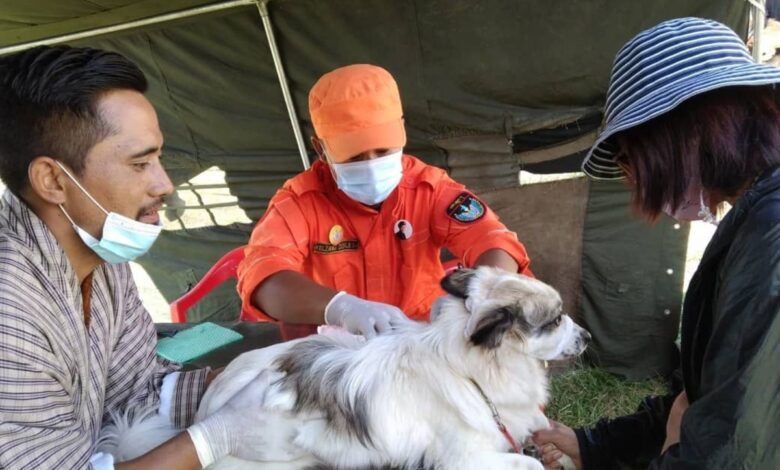
Bhutan’s programme combined mass dog vaccination and dog-population management with human-health services, joint investigations and community work led in part by De-suung volunteers. WHO says free post-exposure prophylaxis will continue in all 20 districts, alongside integrated human-animal surveillance.
Cross-border coordination with adjoining Indian states is also important because animals and people move across administrative boundaries. Sustaining the result requires prompt reporting, vaccine supplies and continued veterinary work, not a declaration that permits the programme to wind down.
Globally, dogs account for up to 99% of human rabies transmission, according to WHO. Bhutan’s achievement provides a practical regional example of how prevention at the animal source and rapid treatment after exposure can operate as one system.
How WHO reached the decision
The validation followed more than a review of national statistics. A WHO-convened regional group first examined Bhutan’s dossier and then carried out an August field mission with support from the World Organisation for Animal Health. Reviewers visited national, regional and sub-district facilities, walked through laboratories, checked programme records and information systems, consulted staff and examined work near the Bhutan–India border.
That process matters because a country seeking validation must show not only an absence of recorded deaths but also a system capable of finding suspected cases, confirming them, preventing infection in dogs and responding if the virus is reintroduced. WHO’s benchmark is therefore evidence of sustained public-health control rather than a one-time count.
What Bhutan must sustain
Bhutan says universal free access to post-exposure prophylaxis will continue across all 20 dzongkhags. Mass dog vaccination, dog-population management, community awareness and joint human-animal surveillance are also meant to continue under the next phase of the national programme and its inter-ministerial One Health structure.
Cross-border coordination is a practical part of protecting the achievement. A virus does not follow district or national boundaries, and a lapse in vaccination or surveillance can allow transmission to return. Fast reporting of suspect animals, reliable vaccine supplies and public knowledge about what to do after a bite remain necessary even after validation.
The lesson for other countries
Bhutan’s experience shows why rabies control works best when veterinary services and human health services act together. Vaccinating dogs reduces the source of infection; wound care and post-exposure treatment protect a person after a possible exposure; laboratories and surveillance reveal where intervention is needed. None of those measures is a substitute for the others, and the result depends on maintaining them over time.
Sources: WHO validation and assessment details; WHO Bhutan programme background.
A volunteer vaccinates a dog during Bhutan’s national programme. Photo: World Health Organization.




