Xi Jinping’s Expected India Visit Signals a Cautious Thaw Ahead of BRICS Summit

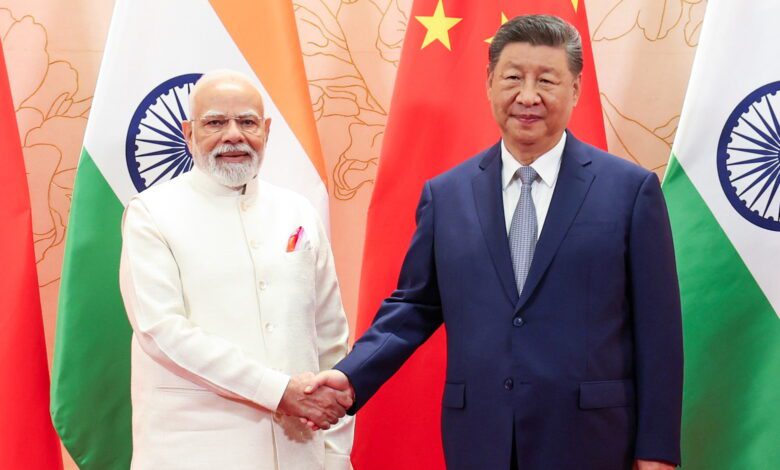
Chinese President Xi Jinping is expected to travel to New Delhi for the BRICS summit on September 12 and 13, in what would be his first visit to India in seven years. Preparations for a large Chinese delegation are under way, although neither government has formally announced his attendance.
The anticipated visit would carry more weight than a routine multilateral appearance. India and China have spent years managing the consequences of their deadly 2020 border confrontation, while also trying to prevent tensions from overwhelming trade, diplomacy and cooperation in groups such as BRICS.
A summit with bilateral significance
Prime Minister Narendra Modi invited Xi to the 2026 BRICS summit, and Beijing has publicly expressed support for India’s chairmanship. If Xi attends, the gathering will provide an opportunity for direct talks at a time when both governments are cautiously restoring high-level contacts.
BRICS has expanded beyond its original members and presents itself as a platform for emerging economies seeking greater influence over global finance and governance. India and China are central to that project, but their competing regional interests and unresolved boundary dispute often limit the depth of cooperation.
A Modi-Xi meeting in New Delhi would therefore be watched for practical commitments rather than symbolism alone. Areas of interest include border management, direct flights, visas, trade restrictions, investment screening and the conditions under which cultural and business exchanges can recover.
Relations remain fragile
The two countries have taken steps to reduce immediate military friction at some points along their disputed Himalayan frontier. That does not amount to a final border settlement, and both sides continue to maintain substantial forces and infrastructure in sensitive areas.
India has also tightened scrutiny of Chinese investment and technology since 2020. China remains one of India’s largest trading partners, yet the relationship is marked by a large trade imbalance and concerns about dependence on Chinese components in electronics, renewable energy, pharmaceuticals and industrial production.
Beijing, for its part, objects to India’s closer security cooperation with the United States, Japan and Australia. New Delhi insists that its partnerships do not remove its strategic autonomy and that stable relations with China require peace along the border.
Why both sides may want stability
Global conditions give both governments reasons to limit confrontation. Trade disputes, shifting US policy, wars affecting energy markets and a slowing world economy have increased the value of predictable regional ties. India wants space to grow manufacturing and attract investment, while China is seeking reliable economic partners and greater diplomatic room.
Stability would also help BRICS avoid being defined by internal rivalry. India generally resists turning the group into an explicitly anti-Western bloc, while China promotes a stronger challenge to institutions dominated by advanced economies. Those differences are unlikely to disappear, but a workable India-China relationship makes compromise easier.
Expectations should remain measured
The reported travel plan is still subject to official confirmation and could change. Even if the visit proceeds, one summit cannot settle the boundary dispute or remove deep strategic mistrust. The most realistic outcome would be a continuation of military dialogue, more predictable diplomatic contact and a limited reopening of economic channels where both sides see a benefit.
India will also want progress to be reciprocal. Domestic opinion remains sensitive to the border confrontation, and any appearance of normalisation without verifiable security improvements would face criticism. China will seek assurances that economic engagement is not permanently constrained by political suspicion.
Xi’s expected arrival would nonetheless mark an important moment. Hosting the Chinese leader in New Delhi after a seven-year absence would show that the two Asian powers are willing to test a controlled thaw. Whether that becomes a durable change will depend on what happens after the summit, particularly along the border and in the rules governing trade and investment.