US Cancels Major South Korea Marine Drill as Iran War Strains Military Resources

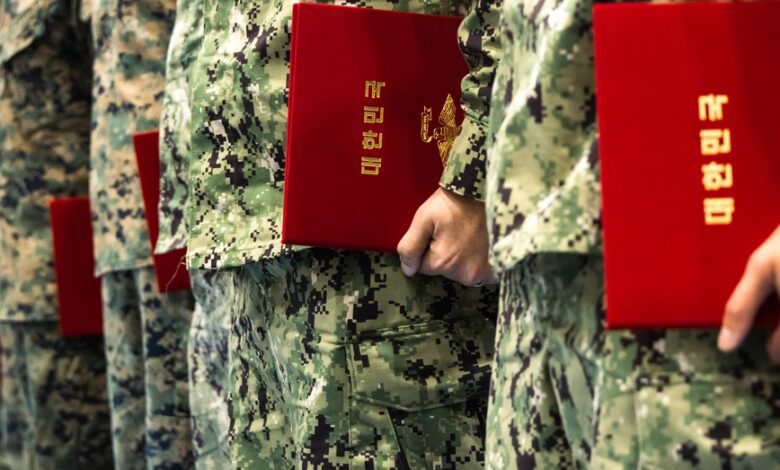
The United States has cancelled a large amphibious exercise with South Korea that had been scheduled for next month, with South Korea’s Marine Corps saying the war with Iran has constrained the availability of US forces. The decision affects Exercise Ssang Yong, a prominent drill designed to practise the movement of troops and equipment from sea to land.
The cancellation adds to signs that the expanding demands on American military assets are being felt far beyond the Middle East. Washington maintains commitments in Europe, East Asia and other regions, but ships, aircraft, logistics units and specialist personnel cannot be deployed in several places at once.
Why Ssang Yong matters
Ssang Yong brings together US and South Korean forces for complex amphibious operations. Such exercises test command systems, communications, naval support, air cover and the ability of Marines to establish and sustain positions ashore. They also provide a visible demonstration that the two allies can operate together during a crisis.
The drill has particular significance on the Korean Peninsula, where North Korea maintains a large conventional military and a growing nuclear and missile arsenal. Seoul and Washington describe joint exercises as defensive preparation. Pyongyang regularly condemns them as rehearsals for invasion and has often responded with military demonstrations of its own.
Cancellation does not end the US-South Korea alliance or remove the American military presence in the country. It does, however, take away one opportunity for units to practise a difficult mission at scale and may encourage questions about how prolonged operations in one region affect deterrence in another.
Iran conflict reshapes deployments
US planners have moved major assets toward the Middle East as the Iran war continues. The aircraft carrier USS George Washington, normally associated with Pacific operations, has been shifted toward the Arabian Sea, illustrating the kind of trade-off commanders face when demand rises suddenly.
Amphibious and naval units are especially valuable because they combine mobile air power, troops and logistics without requiring permanent access to land bases. The same flexibility also means they are among the first forces redirected during an emergency, leaving fewer options elsewhere.
The pressure is not limited to ships. Air defence, intelligence, refuelling, transport and maintenance capacity can become bottlenecks in a sustained conflict. Replacing cancelled training is possible, but doing so later may disrupt other schedules and increase costs.
A wider pattern of reduced training
The decision follows an early end to the Ulchi Freedom Shield exercise. That annual command-post and field training programme was cut short after President Donald Trump ordered reductions. The administration has linked some changes to its effort to manage relations with North Korean leader Kim Jong Un, while South Korea has declined to join the Iran war.
North Korea has argued that reduced exercises do not go far enough and has continued missile activity. Seoul must therefore balance support for diplomacy with the need to maintain readiness. Repeatedly changing or cancelling major exercises can complicate that balance even when forces continue smaller-scale training.
What the allies must manage next
Washington and Seoul can mitigate the loss through simulations, staff exercises, smaller unit drills and rescheduling. None fully duplicates the logistics and coordination required for a large amphibious landing. The allies will need to explain how they plan to preserve those skills if the Middle East commitment lasts.
The episode also highlights a broader strategic question for the United States: whether its force structure is sufficient for simultaneous crises. Allies depend not only on treaty language but on the timely availability of ships, aircraft, ammunition and trained personnel.
For South Korea, the immediate issue is readiness on the peninsula. For the wider region, the cancellation is evidence that the Iran war is altering American choices in Asia. How frequently those choices recur will shape perceptions of US capacity and reliability long after this single exercise disappears from the calendar.