
US Supreme Court Opens Path for Trump Mail-Voting Restrictions

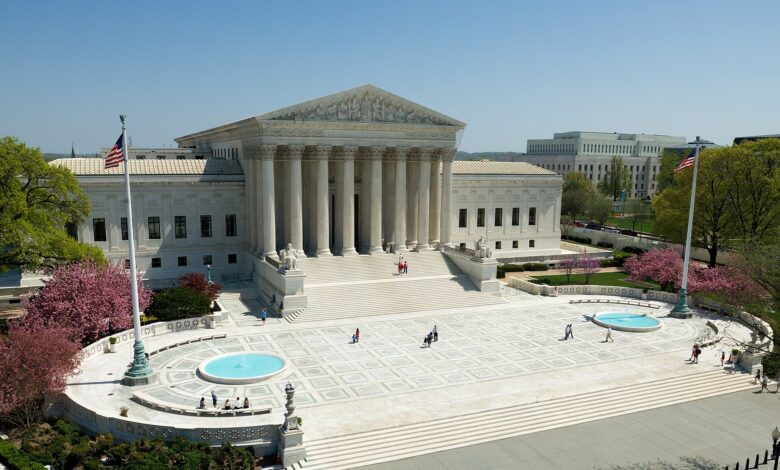
The United States Supreme Court has allowed parts of President Donald Trump’s executive order on mail voting to move forward while litigation continues, temporarily lifting a lower-court injunction against two disputed sections. The emergency decision changes the immediate legal position but does not settle whether the policy is constitutional or how broadly it can be implemented before the midterm elections.
The court granted the administration’s request for a stay on Monday in Trump v. California. As is common with emergency orders, the brief ruling did not provide a full explanation of the justices’ reasoning.
What the order does and does not do
The stay applies to sections two and three of Executive Order 14399. It permits the federal government to act under those provisions for now, despite a lower court’s conclusion that they were likely unlawful. The underlying case will continue, and courts can eventually reach a different final judgment after fuller briefing.
Other injunctions and related cases also remain relevant. That means the ruling should not be read as an immediate nationwide abolition of mail voting or as a definitive endorsement of every administration proposal. Election officials will need to examine exactly which actions are permitted in their jurisdictions and whether other court orders still block them.
A constitutional division of power
US elections are primarily administered by states under rules created by state legislatures, subject to powers given to Congress by the Constitution. Presidents have authority over the executive branch, including federal agencies such as the Postal Service, but do not possess a general power to rewrite state election law.
That division is central to the challenge. California and other opponents argue that the executive order intrudes on state authority and attempts to impose election conditions without legislation from Congress. The administration argues that federal agencies can protect election integrity and enforce existing federal requirements.
The dispute also raises anticommandeering concerns: the federal government generally cannot simply order state officials to run their programmes according to federal executive preferences. Courts must distinguish between lawful conditions attached to federal functions and an unconstitutional command to state governments.
Postal rules add another layer
The US Postal Service has prepared a 95-page final rule tightening standards for ballot mail. Whether and when all of those provisions take effect depends on litigation and implementation decisions. Postal processing rules can have large consequences because states differ on whether ballots must be received by Election Day or can be counted when postmarked by that date.
Voters should rely on current guidance from their state and local election offices, not partisan messages or assumptions based on a single court headline. Returning a ballot early, using an authorised drop box where available or voting in person can reduce exposure to mail delays, but the lawful options vary by location.
Security and access both matter
Supporters of tighter rules say uniform deadlines and verification can improve public confidence. Opponents warn that sudden federal changes could disenfranchise eligible voters, particularly military personnel, people with disabilities, rural residents and others who depend on the mail.
Those goals need not be treated as opposites. Secure systems require clear custody, accurate voter rolls, reliable verification and auditable counting. Accessible systems require realistic deadlines, notice of rejected ballots and a fair opportunity to correct mistakes. Policy should be evaluated by evidence of fraud, error and voter impact rather than by slogans.
Uncertainty close to an election
Major rule changes shortly before voting create operational risk. Election offices need time to train workers, print instructions, configure software and inform the public. Courts have often considered that disruption when deciding whether to alter procedures near an election, although the legal doctrine is applied case by case.
The Supreme Court’s stay is consequential because it gives the administration more room to proceed. It is not the last word. The final outcome will turn on constitutional authority, statutory interpretation and the concrete steps federal agencies take under the order.
For voters, the practical advice is simple: verify deadlines through official local sources and act early. For the government, the higher obligation is to ensure that any integrity measure is lawful, transparent and implemented without needlessly preventing qualified citizens from casting a ballot.




