Russian Drone Barrage Hits Kyiv Region for Second Day, Damaging Homes and Warehouses

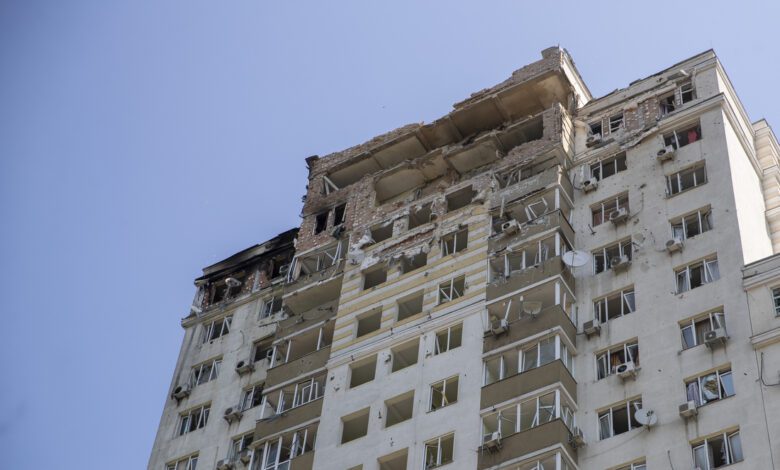
Russian drones struck the Kyiv region for a second consecutive day on Friday, damaging homes, apartment buildings, vehicles, businesses and warehouse facilities across five districts.
Ukraine’s air force said Russia launched 164 drones overnight and that 137 were shot down or otherwise neutralised. The figures are military claims made during an ongoing war, but the physical damage was separately documented by regional officials and emergency teams.
Damage across the region
Kyiv regional authorities reported damage to 14 warehouse premises, 16 private homes, three apartment buildings and 16 vehicles in the Fastiv, Boryspil, Vyshhorod, Brovary and Bucha districts. At least one person was reported killed outside the capital and two injured.
Among the facilities hit were logistics and production sites. A warehouse serving book retailers and publishers was destroyed, while facilities linked to the Nova Poshta delivery network were also damaged. Repeated attacks on storage and distribution can disrupt ordinary commerce even when a site is not part of the electricity or military system.
Competing accounts of the targets
Ukrainian officials described the affected sites as civilian infrastructure. Russia’s defence ministry said its forces struck a Kyiv-region warehouse storing Ukrainian Flamingo cruise missiles and fuel for rocket boosters. Neither side’s full account could be independently verified at every location, and damage across several districts means a claim about one target does not explain all impacts.
International humanitarian law requires parties to distinguish military objectives from civilians and civilian objects, take feasible precautions and avoid attacks expected to cause excessive civilian harm in relation to the anticipated military advantage. Warehouses can be lawful targets if effectively used for military purposes, but civilian proximity and the choice of weapon remain relevant.
Pressure through prolonged air alerts
The attacks followed an hours-long barrage on Thursday and kept air-raid warnings active through parts of Friday. Even intercepted drones impose costs: air-defence ammunition is expended, fragments can fall into populated areas, and residents repeatedly move to shelter. Jet-powered and decoy drones can also complicate detection and force defenders to make rapid allocation decisions.
Ukraine has expanded long-range strikes on Russian oil, logistics and military facilities, while Russia has intensified attacks on Ukrainian cities and infrastructure. Civilian casualties have occurred on both sides of the border. Claims by either government should be tested against independent evidence rather than accepted as a complete account.
Emergency services in the Kyiv region were extinguishing fires, assessing structural safety and helping affected residents. The immediate public guidance remained unchanged: respond to air-raid alerts, stay away from windows, do not publish air-defence positions in real time and avoid handling drone debris, which may contain explosives or hazardous material.