Brač Wildfire: Croatia Mobilises Firefighters, Aircraft and Sea Rescues as Crews Defend Communities

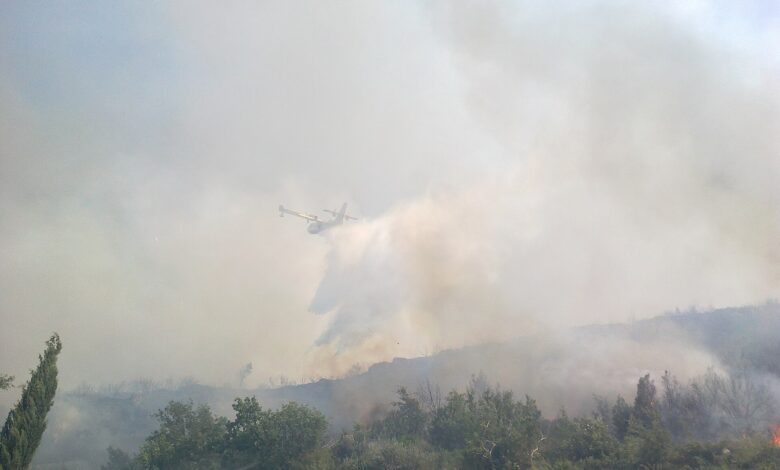
A large wildfire on Croatia’s Adriatic island of Brač prompted a major firefighting, air-support and maritime-rescue operation over the September 11–13 weekend, as authorities worked to protect communities around Ložišća and Milna. The Croatian Firefighting Association said on September 13 that the fire remained active and that the estimated burned area was about 1,500 hectares. Its updates stressed both the scale of the response and an important point of reassurance: at the time of its evening assessment, homes were not under threat and no civilian or firefighter injuries had been reported.
The incident has drawn attention because Brač is a populated, tourism-dependent island where access, water supply and evacuation routes can be more complicated than on the mainland. The response therefore involved more than ground crews. Firefighters, water-bombing aircraft, the Croatian Navy, port authorities, police, rescue services, tugboats, tourist vessels and private boats all had roles at different stages of the operation.
What Croatian officials reported
In its September 13 update, the Croatian Firefighting Association said about 176 firefighters and 53 vehicles were engaged on Brač. It said that 44 additional firefighters and 16 vehicles from other counties were due to arrive by ferry. The Association reported three Canadair CL-415 water bombers and one Air Tractor 802 FireBoss aircraft working on the fire at the time of its 18:00 update. Earlier operational updates described more than 130 firefighters working overnight, alongside aerial resources and reinforcements from several coastal and regional units.
The Association said the fire had affected grass, low vegetation, maquis scrub and forest. The 1,500-hectare figure was an estimate in a live emergency, not a final land-damage assessment. Burned-area estimates can change after mapping, perimeter checks and post-fire assessment, which is why it is better to attribute the figure and date than to present it as a fixed final total.
Why sea rescue became part of the operation
Fire conditions near the coast led people to seek safety away from the advancing flames. Croatia’s Ministry of the Sea, Transport and Infrastructure said the national maritime rescue coordination centre in Rijeka and the Port Authority in Split began coordinating rescue and evacuation activity at 21:56 on September 12 after reports involving people on the western side of Brač. The response included four rescue boats from the Split port authority and its local branches, police vessels, Coast Guard assets, tugs, mountain-rescue boats, tourist vessels and private craft.
The Ministry’s description is useful because it shows how a wildfire can become a maritime public-safety incident even when the fire itself is on land. Coordination was focused on people in danger near the shore and on moving people away from the wider Milna area. Official reporting should not be reduced to a single island-wide total. The official accounts provide more specific information about the people moved by particular services rather than a consolidated island-wide total.
Verified evacuations and medical transport
The Croatian Ministry of Defence said naval vessels and teams helped evacuate eight civilians overnight. It separately reported that a pregnant woman and two patients were transported with a medical team for urgent care. Those three medical transfers should not be added automatically to the eight civilian evacuations as though all represented the same type of movement; the Ministry describes them separately. This distinction is small but important in a fast-moving emergency where totals can otherwise become distorted.
The Defence Ministry also said aircraft and naval forces would continue supporting firefighters and other services. Its operational account noted the use of Canadair CL-415 aircraft, Air Tractor aircraft and reconnaissance support. Such air assets are particularly valuable on rocky or densely vegetated terrain, where ground crews may have limited access and where the speed and direction of a fire can change with weather conditions.
What remains unknown
Authorities had not announced a cause of the fire in the official updates reviewed for this report. There is no basis, at this stage, to attribute the blaze to arson, equipment failure, weather conditions or climate change. Those subjects may be examined later, but they are not interchangeable: a long-term climate trend, a day’s weather, ignition source and fire-management conditions are separate questions that require separate evidence.
Nor is the response story over simply because homes were not under threat at the time of the evening briefing. Fire crews were still active on the scene, monitoring changing conditions, defending populated areas and working on containment and later rehabilitation. The Association urged residents and visitors not to use roads near the fire and not to approach the area to film or photograph it, because doing so can obstruct emergency vehicles and create new risks.
What comes next
The most useful next updates will be from the Croatian Firefighting Association, civil-protection bodies and local authorities: whether the fire has been contained, a final mapped estimate of the area burned, any change in danger to homes or transport, and the eventual findings on its cause. For travellers, the practical message remains to follow local emergency instructions and avoid closed or restricted areas rather than relying on social-media footage.
The Brač response illustrates the range of services required when a wildfire reaches coastal communities: local firefighters defend the ground, aircraft slow the spread from above, and maritime agencies make sure residents and visitors have a safe route away from danger. Reporting those roles accurately is more useful than exaggerating either the evacuation numbers or the certainty of early claims.
Sources
- Croatian Firefighting Association: Brač operational update
- Croatian Ministry of Defence: military support and evacuations
- Croatian Ministry of the Sea, Transport and Infrastructure: maritime rescue coordination