Ukraine Withdraws From Vuhledar, Town Long Under Russian Attack
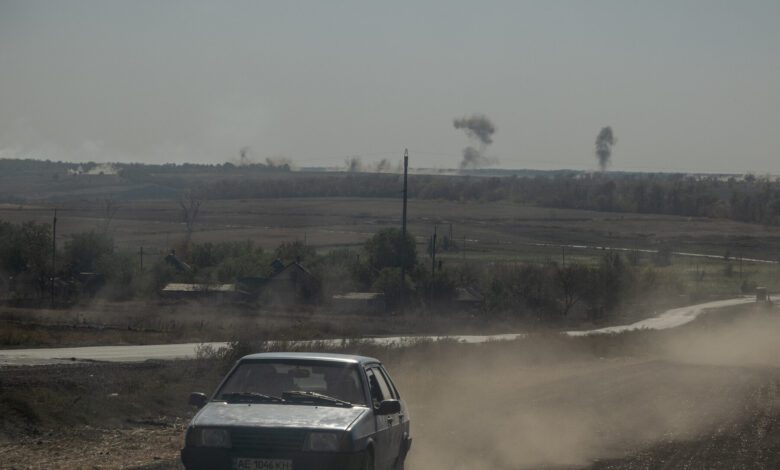
Ukraine confirmed on October 2, 2024, that its forces had withdrawn from Vuhledar, a heavily destroyed coal-mining town in Donetsk region that had resisted repeated Russian assaults for nearly two years. The military said the retreat was authorized to preserve personnel and equipment after Russian troops threatened to encircle the defenders.
Vuhledar occupied tactically valuable ground
The town sat on elevated terrain near roads connecting sectors of the southern and eastern fronts. High-rise buildings and open approaches had helped Ukrainian forces observe and strike Russian units during earlier attacks.
Its position made it useful, but not an irreplaceable national logistics hub. Analysts warned against describing the capture as a single breakthrough that would determine the war.
Earlier Russian attacks had been costly
Russian forces suffered major equipment and personnel losses during assaults in early 2023, when armoured columns moved through exposed approaches. Ukraine’s 72nd Mechanized Brigade became closely associated with the defence.
Holding the town fixed Russian units and protected nearby lines. It also exhausted Ukrainian troops as the battle continued with limited opportunities for rotation.
The balance changed in 2024
Russian forces advanced on the flanks, increased pressure on supply routes and used glide bombs, artillery and drones against Ukrainian positions. Threats from several directions made reinforcement and withdrawal progressively more dangerous.
Ukraine faced shortages of infantry and ammunition along a long front. Defending every ruined settlement to the last possible moment risked losing experienced personnel needed for the next line.
The withdrawal was a military decision
Ukraine’s Khortytsia operational group said senior command permitted units to leave so they could take positions for further action. President Volodymyr Zelensky later defended saving soldiers over retaining destroyed buildings.
A withdrawal under pressure is a battlefield loss. It is not the same as an entire formation being destroyed, and immediate claims about casualty numbers from either belligerent required independent evidence.
Russia gained territory and a symbol
Capturing Vuhledar removed a Ukrainian strongpoint and allowed Russia to improve movement in part of western Donetsk. It also offered the Kremlin a public victory after earlier failed assaults.
The Institute for the Study of War assessed that the gain was unlikely by itself to transform Russia’s broader operations because the town was not a central logistics node and nearby routes were already under pressure.
The civilian town had effectively vanished
Vuhledar had a pre-war population of roughly 14,000. By the final battle, only a small number of residents remained, and virtually every building had been damaged.
The destruction reflects the human meaning of territorial maps. Capture did not deliver a functioning town; it transferred control over ruins from which most people had fled.
The fall fit a wider eastern advance
Russian forces were also pressing toward Pokrovsk and other Donetsk positions. Vuhledar’s loss showed the cumulative effect of manpower, air-power and ammunition advantages rather than a single tactical mistake.
Ukraine’s next challenge was to stabilize prepared positions and prevent a local retreat from producing a wider collapse. Russia still had to supply and protect forces moving beyond the captured town.
The battle’s significance needs proportion
Vuhledar mattered because of terrain, endurance and the pressure its fall revealed. It did not provide Russia with automatic control of Donetsk region or end Ukraine’s capacity to resist.
The verified chronology is clear: after years of attack, Russian flanking pressure made the position increasingly untenable; Ukraine ordered a withdrawal; and Russia occupied a devastated town. Strategic predictions beyond that point should remain conditional. The lasting certainty is that thousands of residents lost their community while soldiers on both sides paid heavily for ground measured in a few kilometres.