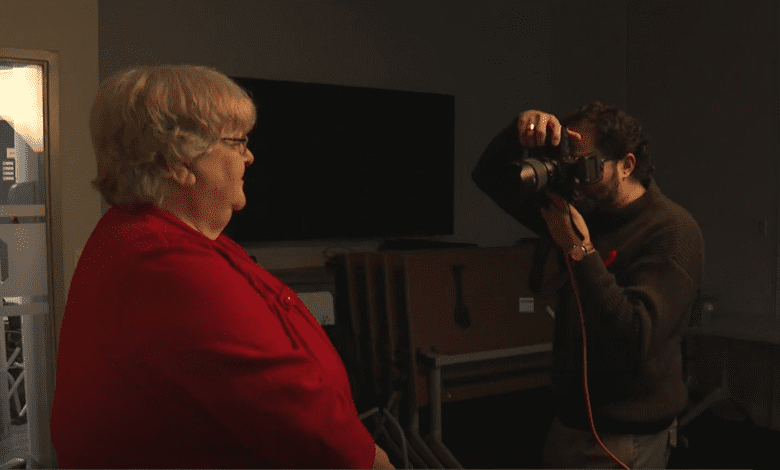
Photographer Trevor Godinho’s “Honour Country Sacrifice” project set out to make portraits and record stories of 400 Canadian veterans and serving Armed Forces members across the country. Inspired by conversations on Remembrance Day 2017, the work sought to preserve individual experiences that might otherwise disappear and show the diversity behind the uniform.
How the project began
Godinho spent time with Second World War and NATO veterans in 2017 and left wondering how many comparable stories had never been recorded. He began building temporary portrait studios in different cities and inviting veterans to sit without charge and share an account of their service.
The project’s title names three themes—honour, country and sacrifice—but its method focuses on a person rather than an institution. A carefully made portrait asks viewers to meet a face before reducing a veteran to rank, medal or conflict.
A broad definition of who is seen
Veterans Affairs Canada said the series included people from the Second World War through current service as well as relatives of those who died. Godinho aimed to represent all genders and gender expressions, people of colour, Indigenous people and members of 2SLGBTQI+ communities.
That breadth corrects a familiar visual shorthand in which a Canadian veteran is imagined only as an elderly white man from one war. Earlier generations remain essential, but peacekeepers, reservists, women, LGBTQ+ veterans and people from racialized communities also carry military histories.
Portraiture and oral history have different strengths
A photograph preserves appearance, expression and the encounter between subject and photographer. An interview preserves language, memory and interpretation. Combining them allows a viewer to see the individual and understand something of what service meant to that person.
Memory is not the same as an official record. Dates and unit details can be checked against archives, while personal reflection should be presented as lived testimony. Ethical oral history also requires informed consent, clarity about future use and respect for a participant who chooses not to discuss trauma.
Taking the studio across Canada
A national series cannot be built only in Ottawa and Toronto. Temporary studios reduce travel burdens and can reach regional military communities. They also require funding, local partners and safe long-term storage for high-resolution images, recordings, captions and permissions.
Digital access expands the audience, while a travelling gallery gives communities a physical place to gather. Accessible captions and transcripts make the work usable by people who cannot hear an interview or visit an exhibition.
Recognition and the long-term task
Godinho later received a 2024 Minister of Veterans Affairs Commendation for the project. Recognition can help attract participants and support, but the more demanding measure is whether the archive remains available, accurate and cared for decades from now.
The goal of 400 portraits was ambitious because every session represented a relationship, not just an image count. A durable collection should document names as subjects want them recorded, service context, photographer credits and restrictions on reuse.
“Honour Country Sacrifice” treats remembrance as active preservation. Its portraits cannot speak for every veteran or resolve debates about Canada’s wars. They can prevent hundreds of individual lives from becoming anonymous and give future Canadians a record in which military service is visible in more than one age, identity or experience.