
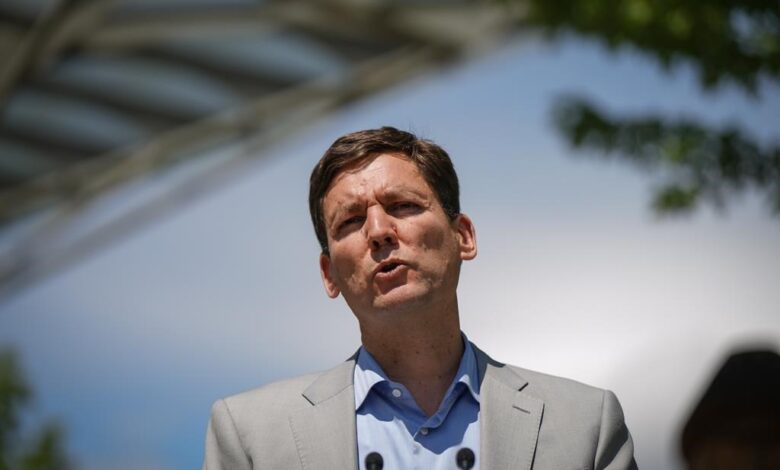
British Columbia Premier David Eby said in September 2024 that his government would end the province’s consumer carbon tax if Ottawa removed the federal requirement for provinces to maintain an equivalent price. He said large industrial polluters would still be required to pay.
The promise was conditional
British Columbia could not simply remove its consumer system while the federal benchmark remained. A province without a qualifying system would face the federal fuel charge or another backstop mechanism.
Eby’s announcement therefore described what would happen after a federal policy change.
B.C. introduced carbon taxation early
The province adopted a broad, revenue-neutral carbon tax in 2008, before the national framework. Its long history made the shift politically significant and showed that carbon pricing was not originally a federal imposition in British Columbia.
Design and revenue use changed over subsequent governments.
Eby cited affordability and lost consensus
He said inflation, high interest rates and federal decisions had undermined public support. The government wanted to reduce direct pressure on households while maintaining its climate plan.
Whether removing the levy lowered lasting costs would depend on how fuel suppliers passed through changes.
Industrial pricing would remain
The proposed approach separated charges paid by consumers on fuels from systems applied to large facilities. Industrial carbon pricing can encourage lower-emission production and protect competitiveness through output-based rules.
It does not directly influence every household purchase in the same way.
Climate targets still required policy
Ending one instrument would not end the legal or practical need to reduce emissions. Clean-energy incentives, building standards, transit, methane controls and industrial regulations could carry more responsibility.
Government needed to quantify how replacement measures would close any emissions gap.
Revenue and rebates would change
Carbon-tax proceeds support provincial finances and credits for eligible households. Removing the consumer tax could eliminate both a cost and the associated revenue, requiring spending reductions, new revenue or redesigned benefits.
The distributional effect could differ between low- and high-emitting households.
The announcement came before an election
British Columbia was approaching its October provincial vote, and carbon pricing had become politically difficult across Canada. Opposition parties offered different timelines and climate approaches.
Electoral context did not invalidate the policy but increased the need for costed details.
Businesses needed predictability
Transport operators, fuel sellers and clean-technology investors make long-term decisions based on expected rules. Abrupt changes can strand investments or delay projects.
A published transition schedule would reduce uncertainty if Ottawa changed the benchmark.
The trade-off should be measured openly
Residents could reasonably want both affordable energy and protection from costly fires, floods and heat. Transparent modelling should show household effects by income and location, projected emissions, industrial exposure and fiscal consequences.
Regular public reports would allow voters to compare actual outcomes with campaign promises rather than relying on slogans from either side.
Eby’s statement marked a major change in political support for consumer carbon pricing, but it was not an immediate repeal. The decisive questions were whether the federal condition would occur and whether alternative policies could produce comparable reductions without shifting unfair costs onto households or future generations.



