
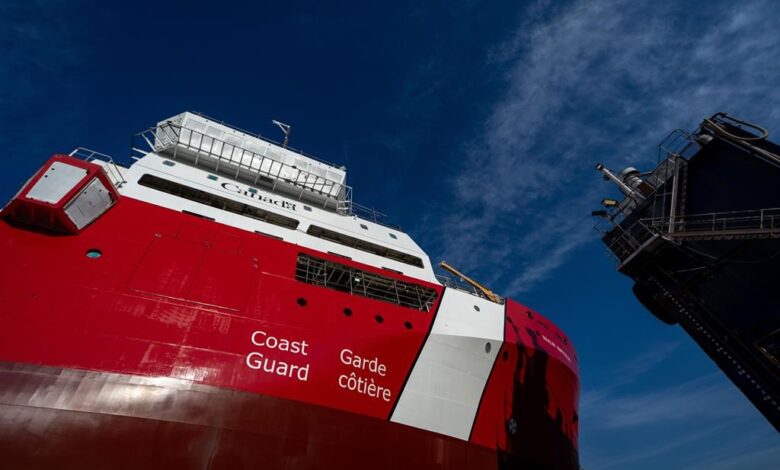
A Canadian Coast Guard electrical officer was reported missing from the icebreaker CCGS Vincent Massey after it travelled off southern Newfoundland in September 2024. A large air-and-sea search ended without finding him; remains recovered in Placentia Bay the following month were later identified as Jocelyn De Varennes of Quebec City.
The absence was discovered on arrival
The crew member was found to be missing on the morning of September 16 as the vessel arrived in St. John’s. Authorities reconstructed the ship’s route to determine where he might have entered the water.
Uncertainty over time and position greatly enlarged the search area.
Multiple agencies searched
Canadian Armed Forces aircraft, Coast Guard vessels and other resources participated under the Joint Rescue Coordination Centre. Crews considered weather, currents, sea temperature and the vessel’s track.
Search-and-rescue decisions use survivability models while accounting for incomplete information.
The active search was eventually suspended
After extensive coverage and no sighting, officials ended the rescue phase on September 17. Suspending a search does not mean the person has been forgotten; it reflects an assessment that further effort is unlikely to produce a rescue.
The Coast Guard offered support to colleagues and family.
Police opened a missing-person investigation
The Royal Canadian Mounted Police used Newfoundland and Labrador’s missing-person law to examine the circumstances. A workplace occurrence at sea can involve policing, occupational safety, maritime authorities and the employer.
Those processes have different mandates and disclosure rules.
The crew member was later identified
The Coast Guard named De Varennes as an electrical officer from Quebec City. Responsible reporting waited for official identification and family notification rather than circulating rumours about a missing worker.
Personal details beyond the public record were not necessary.
Remains were found in October
Human remains recovered in Placentia Bay on October 19 were examined by the medical examiner. The RCMP later confirmed that they belonged to De Varennes.
That update changed the case from an unresolved missing-at-sea report to a confirmed death investigation.
Cause and responsibility should not be assumed
A person missing from a ship may be lost through accident, medical emergency, intentional act or other circumstances. The existence of safety rails, procedures or electronic systems does not establish what happened in a particular case.
Findings should come from the appropriate investigation.
Maritime safety can still be reviewed
Operators can examine watch practices, access points, lighting, alarms, muster procedures and man-overboard detection. Recommendations should follow evidence and protect confidential health information.
The original alert accurately described an urgent search, but leaving it unchanged would now be incomplete. The verified later identification provides closure to the public record while preserving the unanswered investigative question of how De Varennes went overboard. Coverage should honour the person, avoid speculation and publish official safety findings if they become available.
Archived missing-person notices should link prominently to the resolution so search engines do not continue presenting an obsolete appeal. Updating status respects the family and prevents well-meaning readers from spreading outdated information.
The same update should retain the original search dates, preserving an accurate account of the agencies and crews that responded.



