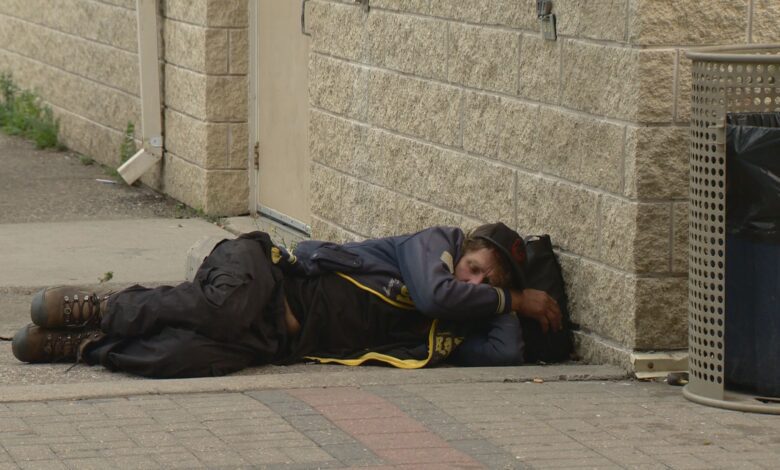
Proposed emergency shelters in Regina and Saskatoon drew objections from nearby residents and businesses in September 2024. Many speakers accepted that people needed safe places to stay but criticized site selection, limited notice and plans for managing effects around the facilities.
Regina considered 1600 Halifax Street
The former Eagles Club property was proposed for a permanent emergency shelter. Delegates pointed to nearby businesses, a correctional transition facility and a Ranch Ehrlo playground, and said consultation came only shortly before the public announcement.
Others criticized years of delay in establishing a permanent location.
Saskatoon selected 210 Pacific Avenue
The city-owned former Saskatchewan Transportation Company building was proposed as a temporary enhanced shelter downtown. It stood near a private children’s mental-health clinic and dance studio.
A municipal distance rule for schools did not cover every private service used by children, prompting questions about its scope.
Need and location were intertwined
People without housing already lived in both cities and faced violence, illness and winter exposure. Rejecting every available site would not remove those risks; it would leave them in streets, encampments, hospitals or police cells.
At the same time, neighbours were entitled to concrete operational information.
Consultation should occur before a decision hardens
Meaningful engagement provides site criteria, service model, capacity, hours, security plan, transportation and complaint contacts early enough for input to change the plan. A last-minute meeting that merely defends a chosen address will predictably deepen distrust.
People who may use the shelter also deserve a voice.
Safety requires an operating plan
Staffing, overdose response, storage, sanitation, outreach, police and fire coordination, and routes to health care and permanent housing determine how a shelter affects its surroundings. Cameras or guards alone cannot replace adequate support.
Governments should publish responsibilities and response times.
Stigma can distort the debate
Homelessness does not make a person criminal or dangerous. Concerns should be tied to specific evidence and mitigations rather than assumptions about everyone seeking a bed.
Coverage should avoid presenting sheltered residents as an invading population separate from the city.
The proposals later moved forward
Saskatoon council approved temporary shelter use at 210 Pacific Avenue for up to 18 months on September 25, with The Mustard Seed as operator and a coordinated safety plan. Regina’s proposal also advanced through committee, with added consultation and neighbourhood-maintenance measures.
Later permanent arrangements should be reported separately.
Outcomes can resolve more than rhetoric
Cities should track emergency calls, complaints, shelter occupancy, housing placements, deaths, displacement and neighbourhood conditions before and after opening. Publishing data—with resident privacy protected—allows adjustment and honest evaluation.
The legitimate goal is not to choose between unhoused people and neighbours. It is to operate humane, well-resourced shelter while protecting everyone nearby and building enough permanent supportive housing that emergency beds stop being the default response. Transparent siting and measurable management are the route out of recurring conflict.
Independent evaluation should return to both shelter users and neighbours after opening, publish what changed and fund corrections. That continuing feedback is more credible than treating a contentious council approval as either guaranteed success or inevitable failure.