Ontario Premier Doug Ford said in September 2024 that his government had considered buying back the privately operated Highway 407 before announcing a technical evaluation of an expressway tunnel beneath Highway 401. The comments put two radically different congestion strategies into public debate without providing enough cost and performance evidence to compare them.
Highway 407 carries a long political history
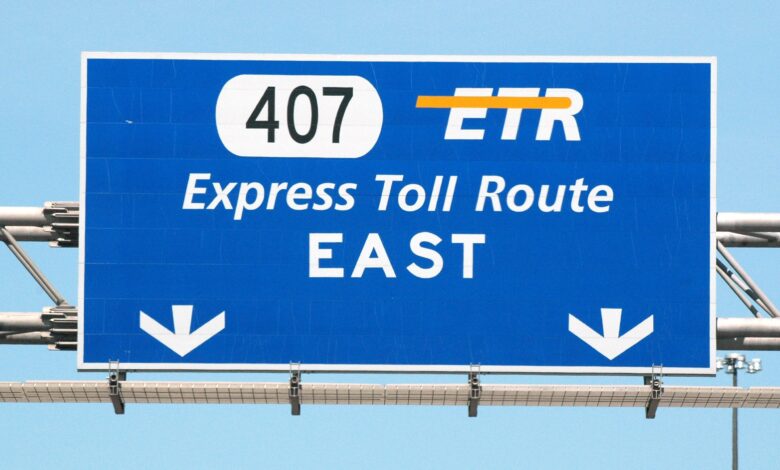
Ontario leased the central 407 electronic toll road to a private consortium for 99 years in 1999 for C$3.1 billion. The transaction has remained controversial as tolls and the road’s estimated value increased.
Other eastern and western 407 sections are provincially owned. Any buyback proposal must specify which assets and contractual rights it includes rather than treating the entire corridor as one property.
Ford said price was a barrier
The premier estimated that acquiring the private concession could cost around C$35 billion and argued that even a purchased 407 would eventually fill as the region grew. No public valuation or negotiated offer accompanied the statement.
A market estimate is not a purchase price. Existing shareholders, debt, future toll revenue, operating obligations and the remaining lease term would all affect negotiations.
The tunnel announcement began with a study
On September 25, the province launched a technical evaluation for a driver and transit expressway under the Highway 401 corridor. Its broad concept extended from beyond Brampton and Mississauga in the west to beyond Markham and Scarborough in the east.
The announcement did not establish a route, design, cost, financing model or opening date. It authorized study of a concept whose scale would exceed familiar urban road tunnels.
Congestion is a real economic problem
The province said Toronto-area commuters lost about 98 hours a year to traffic and that congestion cost the Greater Toronto and Hamilton Area roughly C$11 billion annually. Population and freight growth will place further pressure on roads.
Those estimates support action, but they do not prove that a tunnel is the best action. Benefits must be compared with construction cost, disruption, safety systems and alternatives.
More road capacity can attract more driving
Additional lanes may initially shorten trips, then change route, time and development choices until traffic grows. This induced-demand effect does not mean capacity never helps; it means forecasts must model behavioural response.
A tunnel would also need portals, ventilation, emergency exits, drainage, fire protection and connections to already busy surface networks. Bottlenecks can move rather than disappear.
A 407 strategy has several versions
Government could buy the concession, negotiate truck discounts, subsidize selected trips or use pricing to shift traffic from Highway 401. Each option has a different public cost and effect on demand.
Removing tolls entirely might increase use but also produce congestion on 407 and connecting roads. Targeted pricing could be cheaper while preserving a mechanism to manage peak demand.
Transit and land use belong in the comparison
The tunnel concept mentioned transit, but frequent regional rail and bus service can move more people without requiring every trip to use a car. Freight scheduling, remote work, housing near employment and road pricing can also affect peak traffic.
A fair analysis should compare packages rather than one megaproject against doing nothing. It should include greenhouse emissions, construction risk and who pays or benefits.
Transparency is the missing foundation
Ford’s comments showed that a 407 acquisition had entered political discussion, while the province formally advanced a tunnel evaluation. Neither idea was yet an approved construction plan.
Before committing billions, Ontario should publish demand assumptions, lifecycle costs, travel-time effects and sensitivity tests for population and work patterns. Congestion demands urgency, but the largest proposal is not automatically the most effective. Evidence should decide whether public money buys a concession, a tunnel, transit or a coordinated mix.