
France’s Prime Minister Urges a Divided Parliament to Give Him a Chance
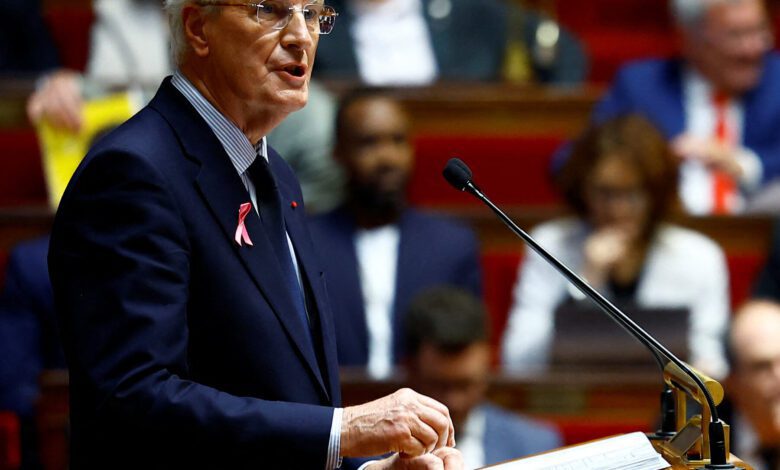
French Prime Minister Michel Barnier asked a sharply divided National Assembly for room to govern on October 1, 2024, warning that public debt had become a threat to national freedom of action. His appeal for compromise faced immediate resistance from the left and depended on the far-right National Rally not joining a censure motion.
An election had produced no governing majority
President Emmanuel Macron called a snap legislative election after the European Parliament vote. The left-wing New Popular Front alliance won the most seats, Macron’s centrist bloc placed second and the National Rally and allies formed another large group, but none controlled the 289 seats needed for an absolute majority.
Macron appointed Barnier, a conservative former European Union negotiator, in September after weeks of deadlock. The choice angered the left, which argued that it should have been invited to lead.
Barnier made fiscal repair the central warning
In his policy speech, Barnier described France’s debt burden as a sword hanging over the country and said the budget deficit required spending restraint and additional revenue from those able to contribute more.
He did not present a fully negotiated majority for those measures. Any budget would have to survive a chamber where opposition parties could combine against the government.
He promised continuity and selected changes
Barnier pledged continued support for Ukraine, attention to public services and tougher control of immigration. He also said he would pursue dialogue with Parliament, local governments, unions and employers.
On pensions, he left room for adjustments to Macron’s unpopular reform while avoiding a promise to repeal it. That ambiguity reflected the conflicting demands inside his supporting coalition.
The left moved quickly toward censure
New Popular Front parties said Barnier lacked democratic legitimacy and proposed a no-confidence motion. It failed on October 9 because it did not receive the votes needed for an absolute majority.
Survival did not amount to stable support. National Rally deputies could allow the government to continue without formally joining it, giving Marine Le Pen’s party considerable leverage.
France’s constitution permits minority government
A prime minister does not need a formal investiture vote at appointment, but the National Assembly can remove the government through a successful motion of censure. Certain constitutional tools can also advance legislation without a normal final vote.
Those mechanisms allow continuity during fragmentation, yet repeated reliance on them can deepen claims that Parliament is being bypassed.
The budget confrontation ended Barnier’s government
In December, Barnier used Article 49.3 of the constitution to advance part of a social-security budget without a vote. The left and National Rally then backed a censure motion, toppling his government on December 4.
It was the first French government removed by Parliament through censure since 1962. Barnier’s tenure became the shortest of the Fifth Republic to that point.
The later fall clarifies the October appeal
Barnier correctly identified that compromise was necessary, but he could not assemble a durable agreement on how to reduce the deficit or distribute the cost. Parties that disagreed on many issues found a shared reason to reject his budget method and plan.
The episode also showed that tactical tolerance by an opposition party is not the same as a coalition. Support can disappear when the political benefit changes.
A divided vote produced divided authority
No bloc could plausibly claim a mandate to implement its entire programme. Macron retained constitutional power to appoint a prime minister, while the Assembly retained power to end the government.
Barnier’s request for a chance was therefore both practical and precarious. He survived the first challenge but not the budget test two months later. The outcome was not simply personal failure; it exposed the difficulty of governing France when the electoral system produces three antagonistic blocs and no agreed mechanism for coalition compromise.



