North Korea Reveals Weapons-Grade Uranium Factory
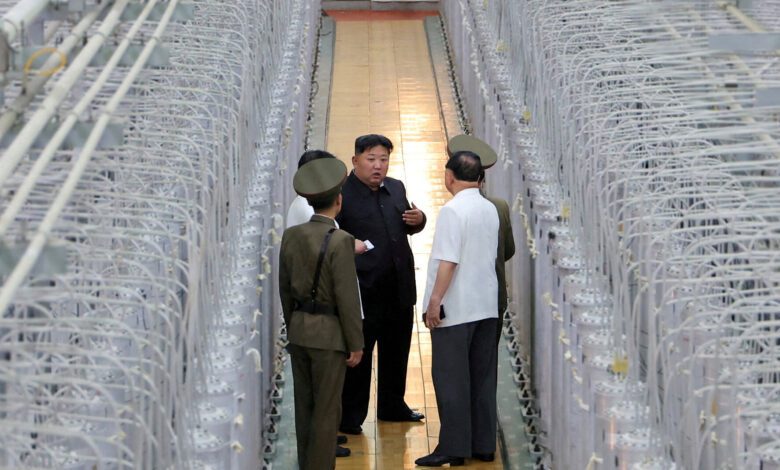
North Korea published photographs of leader Kim Jong Un touring a uranium-enrichment facility in September 2024, the first time it had publicly shown such a site. Rows of centrifuges offered rare visual evidence of a program that Pyongyang had developed largely beyond international inspection.
State media did not reveal the location
The Korean Central News Agency described a Nuclear Weapons Institute and a production base for weapons-grade material but withheld when and where the visit occurred. Analysts compared design details with known or suspected facilities at Yongbyon and Kangson.
Images could inform analysis without conclusively locating the building.
Centrifuges enrich uranium
Natural uranium contains a small proportion of the isotope uranium-235. High-speed centrifuges progressively increase that concentration; low levels can fuel reactors, while much higher enrichment can support nuclear weapons.
The same basic technology makes peaceful and military intent difficult to assess without monitoring.
Kim called for expanded production
KCNA said he wanted to increase the number of centrifuges and exponentially expand the nuclear arsenal. The visit presented technical capacity and political intent together.
State media imagery also served propaganda and deterrence, so every visible detail was curated.
The facility appeared more advanced than earlier equipment
Experts noted that the centrifuge arrangement differed from machinery shown to visiting American scientist Siegfried Hecker at Yongbyon in 2010. That suggested continued domestic development or another generation of equipment.
Photographs alone could not establish operating efficiency or annual output.
North Korea had blocked IAEA access
International Atomic Energy Agency inspectors left the country in 2009. Since then, the agency has relied on satellite imagery, open sources and member-state information to monitor the nuclear program.
The public tour partly confirmed assessments that enrichment continued at more than one site.
Uranium adds a route beyond plutonium
North Korea’s known reactor and reprocessing activities can produce plutonium. Enrichment creates another source of fissile material and may be easier to conceal in unremarkable buildings.
Uncertainty about the size of the network complicates estimates of the arsenal.
The disclosure raised regional concern
South Korea said it was monitoring the North with the United States and promised a strong response to nuclear threats. Japan and other neighbours also faced expanding missile and weapons capabilities.
Military reassurance can deter attack but can also feed an action-reaction cycle.
Sanctions had not stopped the program
United Nations resolutions prohibited North Korean nuclear-weapons activity, yet enforcement, illicit procurement and geopolitical divisions limited pressure. Sanctions also raised humanitarian concerns when they affected ordinary people.
Verification and negotiated limits remained necessary even when diplomacy was stalled.
The photographs clarified and obscured
They demonstrated a functioning-looking industrial hall and Kim’s determination to expand production, but did not disclose enrichment level, inventory, location or safeguards.
Independent specialists could count visible centrifuge rows and compare components, yet any estimate still depended on assumptions about machinery outside the camera frame.
The responsible conclusion was therefore measured: North Korea intentionally revealed part of its uranium capability, strengthening evidence of a growing arsenal while leaving the most important quantities unknown. The display was both a technical signal and a warning designed for foreign audiences.