United, FAA, Microsoft and Banks Hit by Separate US Technology Outages

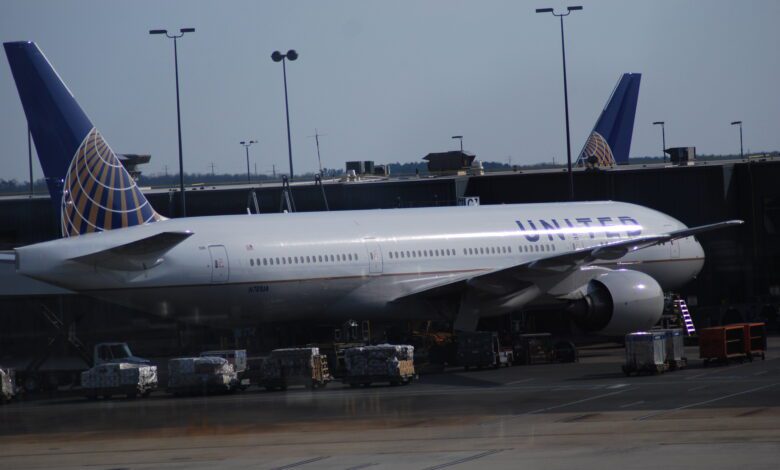
A United Airlines software failure delayed departures for about 90 minutes on November 16, landing in the middle of a remarkable run of unrelated technology breakdowns across US aviation, banking and Microsoft services. Officials and companies say they have found no evidence that the episodes were coordinated cyberattacks. Their proximity nevertheless exposes a common risk: essential services increasingly depend on complex systems that can fail in ways users cannot work around.
United said aircraft already in the air and its United Express regional network were not affected. Pilots told air-traffic controllers that they were waiting for a system used in departure calculations. The airline resolved the problem roughly one hour and 40 minutes after reports began. FlightAware showed about 600 United delays that evening, although not all could be attributed to the software issue.
Why a weight calculation can stop a flight
Before takeoff, crews need reliable aircraft weight and balance information to calculate required runway length, speeds and performance under current weather. A system failure does not mean an aircraft in flight suddenly becomes unsafe. It means crews may be unable to complete or verify the data required to dispatch a new departure safely.
Keeping aircraft at gates was therefore a conservative response. The wider consequence grew because airline schedules are tightly connected. A delayed aircraft may miss its next departure slot, leave a later route without a crew or strand passengers with short connections.
The FAA ground stop was a separate failure
Days earlier, the Federal Aviation Administration ordered a nationwide ground stop lasting more than four hours. US officials said a newly installed router in El Dorado, Arkansas, overloaded parts of an ageing air-traffic system and caused intermittent communications and radar signals at 17 of 22 regional control centres. Authorities grounded flights while they identified the fault.
The decision disrupted hundreds of thousands of journeys and produced thousands of cancellations over the following weekend. Officials said there was no indication of a foreign actor or cyberattack. The episode has renewed scrutiny of old copper connections, contractor oversight, controller staffing and the way upgrades are tested before being introduced into a national safety system.
Microsoft and banks failed for different reasons
Microsoft 365 services—including Outlook, Teams and Copilot—suffered a global disruption after a network-capacity upgrade and subsequent change. Microsoft said the outage was not caused by malicious activity or AI agents. Reports came from more than 70 countries and affected governments, courts, pharmacies and businesses that rely on the same cloud platform.
JPMorgan Chase then experienced a software bug affecting internal hardware and delaying transactions. Customers of several banks and the Zelle network reported difficulty because major financial institutions are interconnected. Chase said transactions returned to normal and that the problem was unrelated to the Microsoft and aviation events.
Online banking being unavailable does not mean deposits have disappeared. Account balances and access channels are different layers. In the United States, eligible deposits are insured within statutory limits by the Federal Deposit Insurance Corporation, although an outage can still cause real hardship when people cannot pay, transfer money or verify a transaction.
Why “not a cyberattack” is not the end of the story
Public discussion often treats cyberattack as the only serious explanation for a large outage. Ordinary technical causes can be just as disruptive: a bad configuration, a capacity assumption, a failed router, an incomplete rollback or a dependency that engineers did not realise was shared.
Resilience therefore requires more than security software. It needs staged deployment, independent fallback channels, offline procedures, realistic disaster exercises and enough staff to operate manually when automation is unavailable. Redundancy is useful only when the backup does not depend on the same failed component.
The cost is spread beyond the operator
Passengers pay for hotels, replacement transport and lost time. Pharmacies manage prescription delays. Small businesses may lose sales when payments fail. Employees work around missing email. These losses rarely appear in a company’s outage report, which typically measures service restoration rather than the social cost of disruption.
Consumer rights vary by service. Airlines generally must offer refunds for cancellations or significant schedule changes when a passenger chooses not to travel, while reimbursement for hotels or ground transport depends on the cause and carrier policy. Customers should save receipts and use official status pages rather than unverified social posts.
A resilience lesson, not evidence of a conspiracy
The clustering of outages naturally produced rumours of a coordinated attack. Available evidence points the other way: separate organisations reported distinct faults and timelines. That conclusion can change if investigators find new facts, but coincidence is not proof of coordination.
The more important connection is structural. Aviation, banking and public services have become faster and more efficient through shared digital infrastructure. They have also acquired common modes of failure. The appropriate response is neither panic nor complacency; it is a public accounting of what broke, why safeguards failed and how the next fault will be contained before it becomes a national event.
Sources
- Associated Press report on the United Airlines disruption
- Associated Press report on scrutiny of the FAA failure
- Microsoft global outage restoration and cause
- Online banking delays and Chase explanation