India and Italy Deepen Trade Talks as Piyush Goyal Visits Rome

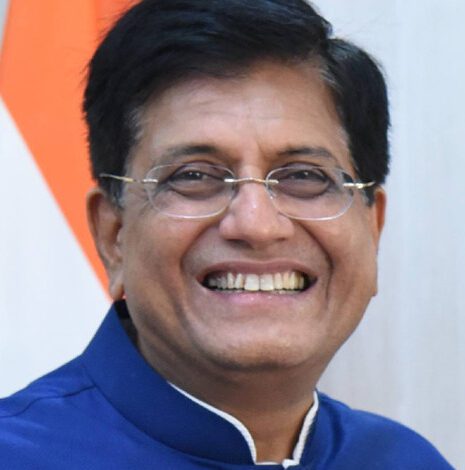
India and Italy are using a two-day ministerial visit in Rome to push a relationship that has moved well beyond diplomatic repair toward industry, technology and investment. Indian Commerce and Industry Minister Piyush Goyal is scheduled to co-chair the 23rd India–Italy Joint Commission for Economic Cooperation with Italian Foreign Minister Antonio Tajani on November 18, alongside a business forum involving about 80 Indian executives and startups.
The meetings are significant, but they should not be presented as a completed trade deal. The official announcement describes a mechanism for reviewing cooperation, identifying obstacles and building commercial links. Any factory, investment or tariff change will still require a specific agreement, financing and regulatory approval.
What is on the agenda
India’s Commerce Ministry says the visit will focus on bilateral trade, investment, industrial technology and startup connections. Goyal is also expected to meet chief executives of Italian companies. The business delegation spans sectors that can turn political interest into joint ventures, supply contracts or research partnerships.
The Joint Commission is the main institutional forum for economic and commercial cooperation between the two governments. Its previous session in Brescia in June 2025 highlighted Industry 4.0, aerospace, the energy transition and sustainable mobility. The two sides also agreed to establish working groups on automobiles and space. The Rome session offers a chance to ask what those groups have actually delivered.
Why the industrial fit attracts attention
Italy has deep capabilities in advanced machinery, automotive components, design, aerospace, food processing, pharmaceuticals and small specialised manufacturers. India offers a large domestic market, a growing manufacturing base, engineering talent and incentives to build supply chains locally. The apparent complementarity is real, but commercial success depends on standards, logistics, skills and the ability of smaller firms to find reliable partners.
For Indian manufacturers, Italian machine tools and process knowledge can improve quality and productivity. Italian firms may see India as both a market and an export base. That model works only when technology transfer, intellectual property, local sourcing and after-sales support are negotiated clearly rather than left to political slogans.
Automobiles and mobility
The automobile working group can address electric vehicles, components, testing standards, charging systems and recycling. Italy’s luxury brands draw attention, but the wider opportunity lies in suppliers that produce brakes, electronics, industrial equipment and specialised materials.
India’s scale makes it attractive, while cost-sensitive consumers make it demanding. A product successful in Europe may need redesign for local roads, climate and price points. Sustainable mobility also includes buses, rail equipment and urban systems, not only private electric cars.
Space and aerospace cooperation
Both countries have established space institutions and private companies. Cooperation could cover Earth observation, small satellites, scientific payloads, ground systems and downstream services for farming, weather and disaster management. Aerospace supply chains require exacting certification and long production cycles, so announcements should be judged by contracts and qualified suppliers.
The same caution applies to defence-adjacent technologies. Export controls and security reviews may shape what companies can share. Clear rules can reduce uncertainty without turning ordinary research partnerships into geopolitical theatre.
Energy transition and industrial decarbonisation
Italy has experience in renewable energy, grid equipment, energy efficiency and circular manufacturing. India needs enormous investment in power, storage and industrial modernisation while maintaining affordability and reliability. Projects that reduce energy use in factories can deliver benefits faster than some headline megaprojects.
Financing remains decisive. A memorandum of understanding is not capital, and a project described as green still needs transparent environmental and social assessment. Businesses will look for predictable permits, contracts that allocate risk and credible demand.
The European Union context
Italy is an important national partner, but many trade rules affecting Indian exporters are set at European Union level. Carbon-border measures, product standards, data rules and the long-running India–EU trade negotiations shape the commercial environment. Rome can advocate within the EU, yet it cannot independently rewrite common European law.
Indian firms also need to understand due-diligence and sustainability requirements that extend through supply chains. Compliance can be costly, but early preparation may improve access to other European markets as well.
What would count as progress
The strongest outcome would not necessarily be a large announcement. Useful progress could mean a functioning working group, a solved standards problem, a startup partnership that gains customers or an Italian supplier that begins durable production in India. Public reporting should distinguish discussions, signed agreements and money actually invested.
India and Italy have political momentum and a plausible industrial match. The Rome meetings can narrow the distance between that potential and commercial work. Readers should watch the post-meeting documents for named projects, timelines and responsible institutions—the details that separate diplomacy from delivery.
Sources
- India Commerce Ministry/PIB visit announcement, November 17, 2026
- Italian Ministry of Foreign Affairs and International Cooperation