Ukraine Strike Disrupts Kerch Bridge: What Is Confirmed and Why It Matters

Ukraine says a coordinated wave of missiles and drones seriously damaged the Kerch Bridge overnight on November 17, collapsing part of the road section and damaging the rail structure that links Russia with occupied Crimea. Russian authorities acknowledged an attack and halted traffic, but offered fewer details about the damage. In wartime, those two facts should be kept separate: there is agreement that the bridge was struck and disrupted, while some of the most specific claims come from a combatant.
Ukraine’s General Staff said an arch and a span of the roadway fell into the Kerch Strait. It said the railway remained standing but suffered damage to an arch. President Volodymyr Zelenskyy described the operation as the culmination of a longer effort to weaken Russian air defences. The Associated Press reported that Russia’s Investigative Committee confirmed drone damage without providing a comparable structural assessment.
Why the bridge carries military and political weight
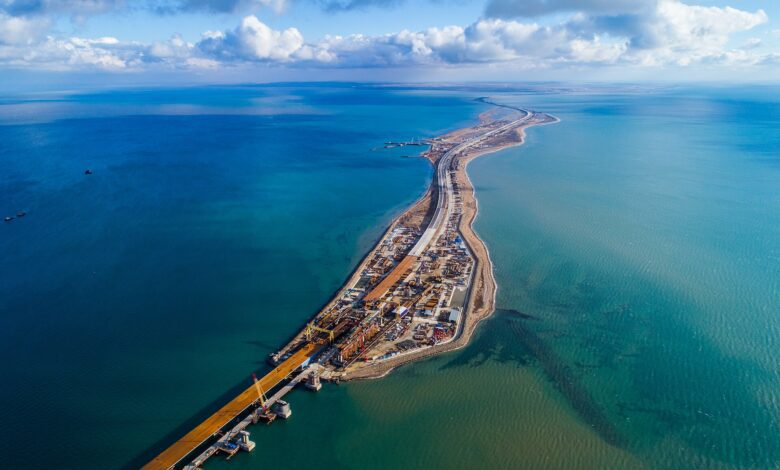
The roughly 19-kilometre crossing has road and rail links between Russia’s Krasnodar region and Crimea, which Moscow seized and illegally annexed from Ukraine in 2014. Most countries continue to recognise Crimea as Ukrainian territory. Russian President Vladimir Putin opened the road bridge in 2018, turning it into a highly visible symbol of Moscow’s claim over the peninsula.
Its practical role is also important. Russia has used the route to move civilian traffic, military personnel and supplies. The rail line can carry heavier loads than the road. Disruption therefore creates logistical pressure, although it does not automatically isolate Crimea. Russia also uses ferries and the so-called land corridor through occupied parts of southern Ukraine. The durability of the impact depends on the extent of the damage, repair time and whether alternative routes remain usable.
A target attacked before
The bridge has been hit repeatedly during the war. An explosion in October 2022 caused sections of roadway to collapse and ignited a fuel train. A July 2023 maritime-drone attack damaged the road section. Ukraine’s security services later acknowledged involvement in those operations. Repairs restored traffic, demonstrating both the bridge’s vulnerability and Russia’s ability to rebuild.
The November 17 attack appears different in scale if the reported arch damage is confirmed. An arch is not simply a surface panel that can be replaced. Engineers would need to examine bearings, supports, track alignment and metal fatigue before allowing heavy traffic. Photographs and short clips circulating online may show individual sections, but they cannot substitute for a full structural inspection.
What each side says
Zelenskyy credited Ukrainian security and defence units and named several domestically produced weapons. Those claims illuminate Kyiv’s message: Ukraine wants to show it can combine different systems, penetrate layered defences and reach strategic infrastructure. They should not be treated as independently verified specifications while the operation is still being assessed.
Russian authorities have previously called attacks on the bridge terrorism. Ukraine argues that the crossing is a legitimate military target because it supports Russia’s war effort. International humanitarian law distinguishes military objectives from civilian objects and requires parties to consider necessity, distinction and proportionality. The presence of civilian traffic does not settle that analysis on its own, and legal conclusions depend on facts about use, timing and expected harm.
Risks beyond the immediate damage
Bridge strikes can trigger retaliation and widen pressure on civilian infrastructure. The latest operation came amid large drone and missile exchanges and Russian attacks on Ukrainian cities and energy systems. That context matters because a dramatic image of one target can obscure the broader human cost of a war that is approaching five years since Russia’s full-scale invasion.
Traffic disruption also affects civilians in Crimea. Queues, fuel concerns and transport delays can develop quickly when the crossing closes. Readers should be cautious with claims that the peninsula has been completely cut off; road and rail closures can change within hours, and alternative routes exist even when they are slower or more exposed.
What can be verified next
Satellite imagery, geolocated photographs, Russian transport notices and later engineering work will help establish the physical consequences. The first useful questions are straightforward: whether road or rail traffic resumes, whether weight restrictions are imposed, which sections require replacement and how freight is rerouted.
The strategic result will take longer to judge. A bridge can be damaged without changing the front line, yet repeated interruptions impose costs and force air-defence and repair resources away from other tasks. Conversely, a spectacular operation can have mainly symbolic value if traffic returns quickly. The responsible conclusion on November 17 is narrower: Ukraine mounted a major strike on a strategically important crossing; significant damage is reported; and the duration of the disruption remains uncertain.
Sources
- Associated Press report on the November 17 strike
- Ukraine General Staff claim, reported by Ukrinform