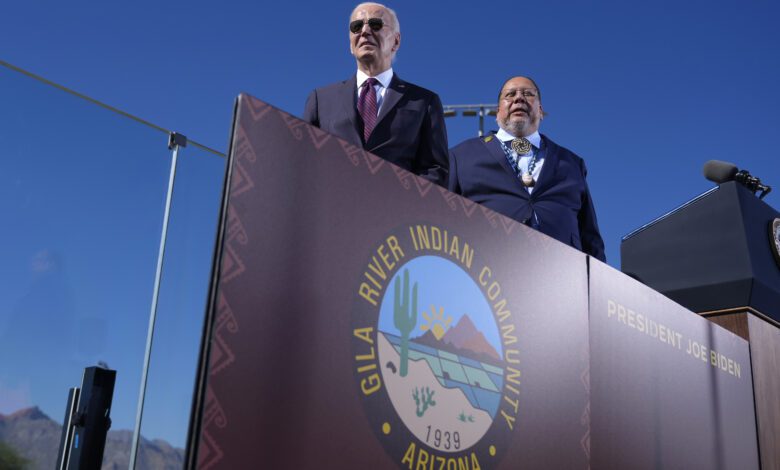
Canadian Indigenous leaders welcomed U.S. President Joe Biden’s formal apology for federal Indian boarding-school policies while stressing that an apology was only a beginning. Biden delivered the statement at the Gila River Indian Community in Arizona on October 25, 2024, acknowledging the federal government’s role in a system built around forced assimilation.
The history acknowledged by the apology
For more than a century, Indigenous children in the United States were separated from their families and sent to institutions that suppressed Native languages, cultures and identities. The U.S. Department of the Interior’s investigation identified 417 federal Indian boarding schools across 37 states or then-territories and documented deaths and burial sites connected with the system.
The department said children experienced renaming, hair cutting, military-style discipline and prohibitions on cultural and religious practices. Some suffered physical, emotional and sexual abuse. The final investigative report found at least 973 documented child deaths, while officials warned that the true total was likely higher because records are incomplete.
Canadian leaders call for action after words
Stephanie Scott, executive director of Canada’s National Centre for Truth and Reconciliation, described the apology as positive but only a first step. She pointed to the continuing work required on harms, reparations and disclosure of truth. Former Assembly of First Nations national chief Phil Fontaine said the United States should consider a truth and reconciliation commission and compensation for survivors.
Assembly of First Nations National Chief Cindy Woodhouse Nepinak said the history echoed First Nations experiences in Canada and urged meaningful engagement with Native American communities. The common theme was that recognition matters, but healing also requires records, survivor-led processes, language and cultural revitalization, mental-health support, accountability and durable resources.
Connections and distinctions with Canada
Canada’s residential-school system and the U.S. boarding-school system had connected assimilationist ideas, and Canada studied American institutions while developing its own policies. They were not identical programs, and each country is responsible for investigating its own governments, churches, institutions, burial sites and legal obligations.
Prime Minister Stephen Harper apologized in Parliament in 2008 for Canada’s residential-school system. Canada’s Truth and Reconciliation Commission later concluded that the system amounted to cultural genocide and issued 94 Calls to Action. The existence of that apology did not complete reconciliation, a history that informed Canadian cautions about treating Biden’s statement as an endpoint.
What meaningful follow-through can involve
The Interior Department’s recommendations included remedies for present-day impacts, a national memorial, further research, return of some former school sites, protection and repatriation of remains and funerary objects, and expanded public education. Decisions about those measures require consultation with Tribal Nations, survivors and descendants rather than a single federal prescription.
Biden’s apology was historically significant because a sitting U.S. president formally accepted federal responsibility. Its value, Indigenous leaders argued, would ultimately be judged by whether the acknowledgment is followed by transparent records, sustained resources and actions shaped by the communities that continue to carry the consequences. Survivor testimony and community protocols also need care: public interest in the history does not override families’ authority, cultural practices or the dignity owed to children who never returned home.