SpaceX’s Falcon 9 Rocket Is About to Crash Into the Moon—and It Could Be Visible From Earth

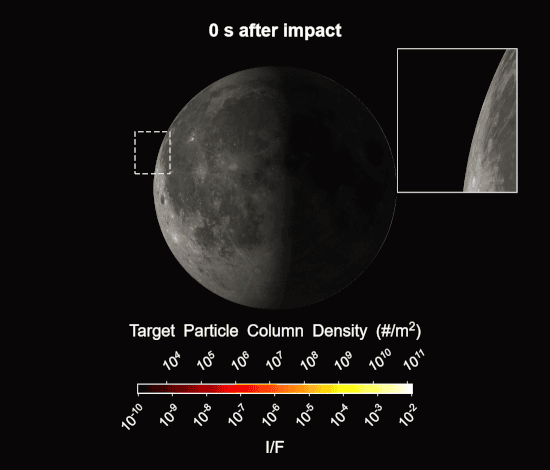
If you own a strong enough telescope, you might be able to witness history on Wednesday: A dead rocket is going to crash into the moon.
On August 5, at around 6:34 am UTC, a spent SpaceX Falcon 9 upper stage is expected to hit the moon’s sunlit western limb near Einstein crater at more than 5,400 mph. If it unfolds as predicted, the crash could throw up a plume of debris bright enough to briefly see from Earth with the right equipment.
That would be a first. No impact flash has ever been recorded on the sunlit face of the moon, and that’s exactly where the Falcon 9 crash is forecast to happen, kicking up plumes of dust that could stand out against the blackness of space. The findings are based in part on two new preprint studies.
That includes one posted July 27 to arXiv and led by William Jo, a doctoral candidate at the University of Texas at Austin’s Cockrell School of Engineering, that forecasts just how big the impact could be. To predict the plume, Jo ran the crash through a high-resolution physics simulation that allowed him to model what would happen when 3,900 kilograms of hollow metal hit the lunar surface. That’s different from solid meteorites making impact.
“It’s like an empty eggshell, because it had all the fuel in it, and there is a rocket engine at one end that’s denser,” David Goldstein, an aerospace engineering professor at UT Austin who supervised the work, says of the Falcon 9.
Rather than burrowing in like a cannonball, the shell will collapse from its edges inward, throwing up a broad, low curtain of soil spreading as far as 183 kilometers wide as well as a thin, faster spike nearly straight up. All told, the crash is forecast to displace about 12,700 kilograms of debris.
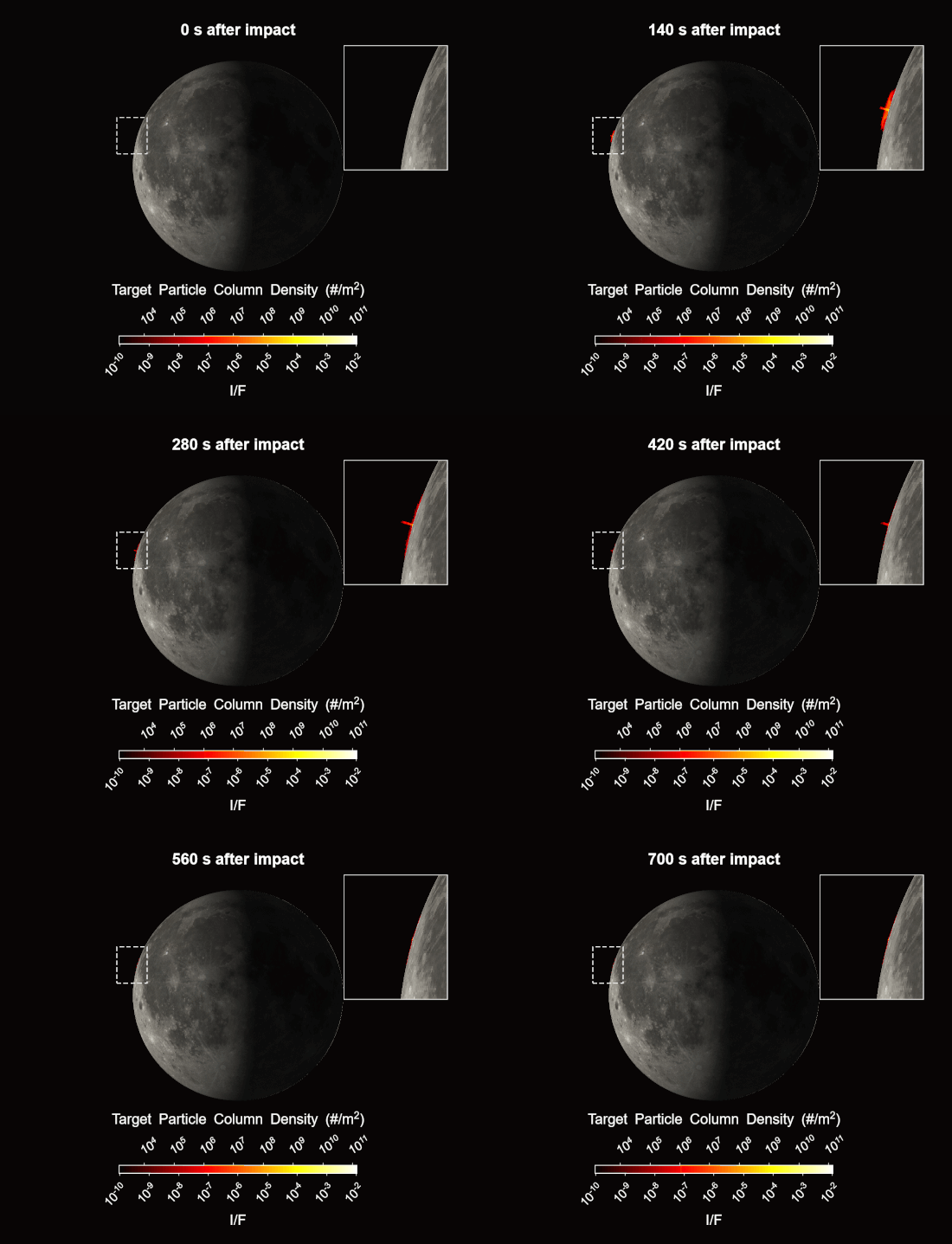
Visualization: Courtesy of Willam Jo/University of Texas
Jo describes the simulation as a “best-case” model. The code is two-dimensional and axisymmetric, so it can only simulate the stage coming straight down, engine-first, basically like dropping a pin on its head. But the real object—the spent stage of a Falcon 9 that carried two landers to the moon in January 2025—is far more likely to arrive at an angle. A glancing strike would throw up a smaller, dimmer plume, possibly without the big spike.
“I would view our study as the most optimistic in terms of generating sprays,” Goldstein said.
It’s a detailed guess at the shape of the splash, but whether a plume will actually be visible from Earth is another matter.