
₹35 Onions in Delhi-NCR: Where Government Buffer Stock Is Being Sold

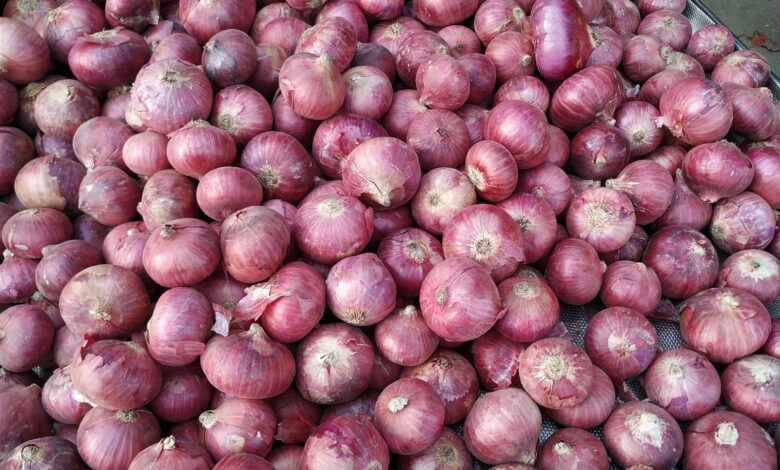
The Union government has begun retail sales of buffer-stock onions at ₹35 per kilogram in Delhi-NCR, using mobile vans and participating outlets to improve availability and moderate seasonal price pressure.
Mobile vans operated through the National Cooperative Consumers’ Federation and National Agricultural Cooperative Marketing Federation were flagged off from Krishi Bhawan on August 27. Government announcements also identify NCCF, NAFED, Safal and Kendriya Bhandar outlets among the channels planned for the wider intervention.
Where consumers can look
In Delhi-NCR, the first places to check are NCCF and NAFED mobile vans, their permanent retail points and participating Safal or Kendriya Bhandar stores. Mobile routes and store stocks can change during the day, so a consumer may need to confirm local availability rather than assuming every outlet carries buffer onions continuously.
The ₹35 rate applies to onions released through the government intervention. It is not a universal legal ceiling for every private market, neighbourhood shop or online seller. Variety, quality, packaging and delivery charges can also make privately sold onions appear at a different price.
Why buffer onions are being released
The intervention is designed to add supply when retail prices face seasonal pressure. The government fixed a procurement target of 200,000 tonnes of rabi onions for the 2026-27 Price Stabilisation Fund buffer and is releasing stock in a calibrated way based on market conditions and local demand.
Officials say overall supply remains adequate. The policy therefore aims to prevent local shortages and sharp price acceleration rather than respond to a nationwide production collapse.
Kanda Express expands onion movement
Rail and road transport are being combined to move stock from producing regions to major consumption centres. During 2024-25, about 12,000 tonnes were transported in 14 railway rakes to five cities. The programme expanded in 2025-26 to roughly 88,000 tonnes moved by 86 rakes to 16 cities.
The Central Warehousing Corporation is supporting scientific storage and distribution. Better storage matters because onions can suffer substantial losses through moisture, heat, sprouting and handling even when the national harvest is sufficient.
Practical buying checks
Buyers should confirm the displayed per-kilogram price, check weight and quality, and request a receipt where available. Any purchase limit imposed at a van or outlet is intended to spread the subsidised stock across more households and may differ as supply changes.
Residents outside Delhi-NCR should not assume that the same retail channel has already begun in their city. The government has said buffer stock will be directed to major consumption centres according to prevailing prices and availability; local launches should be verified through NCCF, NAFED or consumer-affairs announcements.




