DRC Ebola outbreak passes 6,000 reported cases and 3,000 deaths, WHO says

The Bundibugyo Ebola epidemic in the Democratic Republic of the Congo passed 6,000 reported cases on September 1 and reached 3,000 deaths on September 2, according to the World Health Organization.
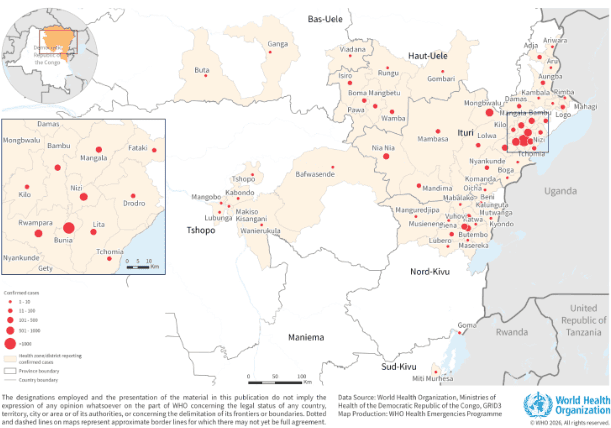
WHO describes it as the second-largest Ebola epidemic on record and the fastest-moving it has seen. The outbreak affects 60 health zones across six provinces. Ituri accounts for 85% of reported cases and 88% of deaths.
Community transmission remains difficult to trace
WHO says most deaths are occurring outside treatment centres, many burials are unsafe and many people who die were not listed as contacts of known cases. Those findings imply transmission chains remain undetected, complicating isolation, monitoring and community protection.
Conflict, displacement, hunger and damaged trust in institutions make the response harder. Public-health teams need reliable local participation as well as beds, laboratories and vaccines.
Response and clinical trials
WHO reports shipping more than 330 tonnes of emergency supplies and deploying more than 300 experts. Laboratory capacity has expanded to 24 facilities capable of about 3,000 tests a day, while more than 1,300 beds are available across 49 treatment facilities. The response aims for 3,000 beds within three months.
A two-treatment trial called PARTNERS has enrolled more than 300 patients. Another study is testing obeldesivir after high-risk exposure. Two Bundibugyo vaccines are in safety trials in the United Kingdom and Canada. WHO cautions that the approved vaccine against Zaire ebolavirus is not yet known to protect against the Bundibugyo species.
The government-led six-month plan seeks $1.3 billion. Case and death totals may change as records are reconciled, but the September 2 WHO briefing is the authoritative basis for the figures in this update.
Why the virus species matters
Ebola disease is caused by a group of related viruses rather than one interchangeable pathogen. Tools developed for an outbreak of Zaire ebolavirus cannot automatically be assumed to work against Bundibugyo virus. WHO says the licensed Zaire vaccine is not yet known to protect against this epidemic, which is why candidate Bundibugyo vaccines and therapeutics are being studied while the response continues.
That distinction is easy to lose in a headline. It affects vaccine selection, laboratory work and the evidence regulators need before recommending an intervention. A trial conducted during an emergency must move quickly, but it still needs ethical oversight, informed participation and interpretable results.
Why cases outside treatment centres are critical
When many patients die outside a treatment facility, families may have less access to diagnosis, supportive care and safe burial teams. If a deceased person was never recorded as a contact, responders may learn about an infection only after additional exposures have occurred. Those patterns explain why beds alone cannot stop transmission.
Local trust influences whether symptoms are reported early and whether contacts stay in communication with health teams. Conflict and displacement can interrupt that relationship, close routes and make routine care harder to reach. Response workers therefore need community partners who can explain measures, identify practical obstacles and correct rumours without dismissing legitimate concerns.
How to interpret the totals
Reported case and death numbers are a dated operational picture. Laboratory confirmation, retrospective investigation and reconciliation between local and national records can change them. The figures in this article are anchored to WHO’s September 2 briefing and should not be read as a live dashboard.
The six-month funding request covers work by the government and multiple partners, including surveillance, laboratories, treatment, logistics, community engagement and research. Whether the plan succeeds will depend not only on money pledged but on how quickly resources reach affected health zones and reduce the number of infections that remain outside known transmission chains.
Sources: WHO September 2 briefing; WHO disease-outbreak notice.
WHO situation map for the outbreak. Image: WHO.