New global mpox vaccine stockpile will be open to every country during outbreaks

A global mpox vaccine stockpile is scheduled to begin operations later in September, creating a standing mechanism that every country can request during an outbreak.
The initiative was launched on August 27 after approval by the Gavi Board in 2025. Gavi will fund it, while the International Coordinating Group on Vaccine Provision will coordinate allocation with the World Health Organization, UNICEF, Médecins Sans Frontières and the International Federation of Red Cross and Red Crescent Societies.
Why a permanent mechanism was created
The partners previously used an ad hoc access-and-allocation mechanism during the 2024 global emergency. A standing stockpile is meant to shorten negotiations and target supplies according to outbreak risk rather than purchasing power alone.
WHO says 145 countries and territories reported 190,683 confirmed mpox cases and 529 deaths from January 2022 through July 2026. About two-thirds of the reported cases were in Africa.
What the stockpile can and cannot do
Vaccination can protect people at high risk, reduce severe disease and help interrupt transmission. Mpox spreads mainly through close physical contact, including sexual contact, while animal-to-human transmission continues in parts of Africa. Children and people with suppressed immune systems can face greater danger.
A stockpile does not automatically solve delivery. Countries still need surveillance, laboratory confirmation, community engagement, cold-chain capacity and staff able to reach affected populations without stigma. The announcement does not specify that every request will receive unlimited doses.
How access is expected to work
The stockpile is intended for outbreak response, with allocation coordinated through the International Coordinating Group on Vaccine Provision. Its partners already work on emergency vaccine supply, allowing a request to be assessed alongside epidemiological information, available doses and the ability to deliver them. Saying that every country can request access does not mean that every request is automatic or that supply is unlimited.
The standing arrangement addresses a problem exposed during earlier emergencies: countries with fewer purchasing resources can lose time while wealthier markets secure doses. Pre-agreed financing and coordination can shorten that process, but national authorities still have to detect an outbreak, provide usable data, identify priority groups and organise safe delivery.
Vaccines are one part of control
Vaccination is normally targeted to people at greater risk of infection or severe disease and to contacts identified during an outbreak. It works alongside testing, clinical care, contact communication and practical information about reducing exposure. Stigmatising a community can make control harder by discouraging people from seeking care or sharing information with health teams.
The global totals in the announcement count confirmed reports submitted over several years; they are not a complete measure of every infection. Limited laboratory access and delayed reporting can leave cases uncounted, particularly during a fast-moving emergency. Trends therefore need to be read with information about testing and surveillance rather than as a simple ranking of countries.
What to watch after launch
The important measures will be how quickly requests are assessed, how doses are divided when demand exceeds supply, whether deliveries reach priority populations and whether countries can use allocations before they expire. Transparent reporting on those points would show whether a permanent mechanism improves equity in practice. Continued investment in local surveillance and health services will remain necessary even if the international stockpile operates as planned.
Source: joint WHO, Gavi, UNICEF, MSF and IFRC release.
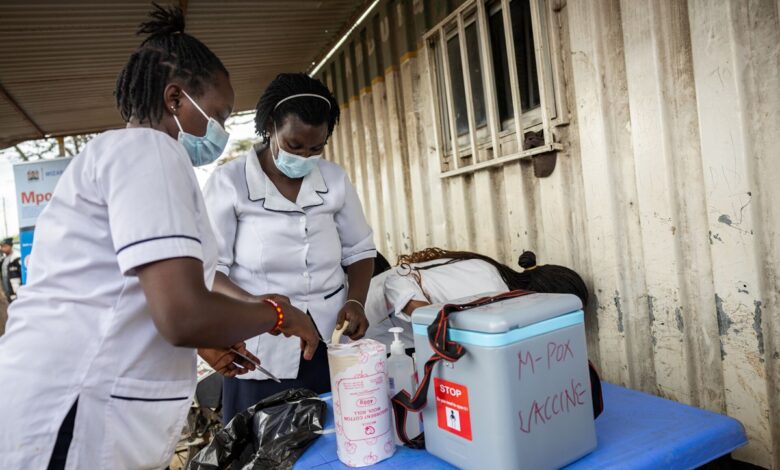
Mpox vaccination campaign in Kenya. Photo: WHO / Ardo Umar Farah.