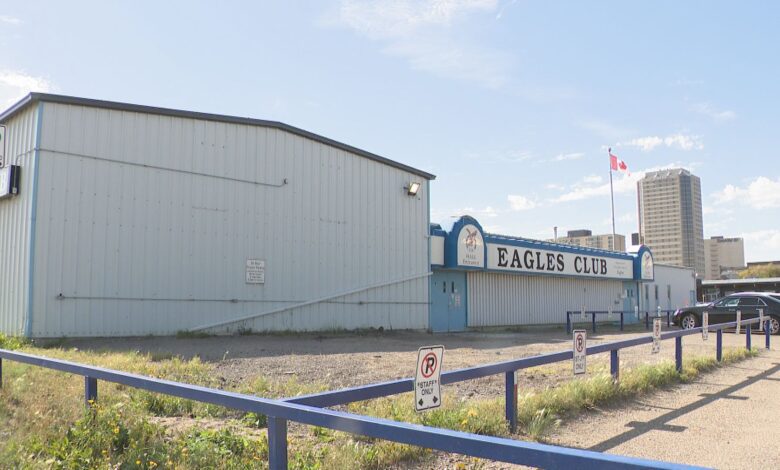
Regina officials advanced 1600 Halifax Street as the proposed home of a permanent emergency shelter in September 2024, reviving a difficult debate about how the city should serve people without housing while addressing concerns from neighbouring residents and businesses.
The proposal used an existing building
The property was occupied by the Regina Eagles Club. Converting it offered a route to a permanent, low-barrier facility after years of temporary arrangements and unsuccessful location searches.
At that stage it was a proposal, not an operating shelter.
An earlier site had been rejected
Council had declined an Albert Street option in June after opposition and debate about cost, location and community effects. The Halifax Street building emerged as a less expensive alternative.
City administration estimated roughly $6 million, compared with about $7.5 million for the earlier locations.
Executive committee moved it forward
Regina’s executive committee recommended proceeding, with a final council decision expected on September 25. Committee approval therefore signalled momentum but did not by itself authorize every acquisition and operating detail.
Public consultation continued before the vote.
Neighbours questioned the process
Some nearby business owners and residents said they learned of the plan late and wanted clearer information about safety, property impacts, policing and daily management. Those concerns deserved direct answers rather than being dismissed as hostility.
Consultation also had to include people who would use the shelter.
Supporters emphasized an urgent gap
Regina needed reliable emergency beds and connections to health, income and housing services. Without an adequate facility, people remained exposed to extreme cold, violence and preventable illness.
Emergency shelter is life-preserving infrastructure, although it is not permanent housing.
Operations mattered as much as the address
A workable plan needed trained staff, round-the-clock rules, harm-reduction and cultural supports, secure storage, meals, sanitation and pathways into housing. Neighbourhood liaison and a transparent complaint process could reduce avoidable conflict.
The operator, service model and stable funding were therefore central questions.
A good-neighbour plan could set expectations
Regular meetings among the operator, shelter residents, businesses, police, health workers and outreach teams can identify problems early. Published contacts and response standards make accountability more concrete.
Enforcement alone cannot replace mental-health, addiction and housing services.
The debate reflected a citywide responsibility
No neighbourhood is likely to welcome every consequence associated with concentrated poverty, yet repeatedly rejecting sites leaves the danger with unhoused residents and public spaces. Fair decision-making must compare real alternatives, costs and mitigations.
Responsible coverage should avoid implying that shelter users cause every nearby incident. It should also track whether promised safeguards, community engagement and outcomes are delivered.
The Halifax Street proposal asked council to balance urgency with due process. A defensible decision required more than choosing a building: it required an adequately funded operating plan, measurable neighbourhood commitments and a larger strategy that moves people from emergency beds to stable homes.
Decision-makers also needed to publish timelines and financing assumptions. Capital renovation, annual operations and supportive services are different costs, and an inexpensive purchase can become ineffective if staffing is underfunded. Tracking occupancy, exits to housing, emergency calls and unresolved complaints would allow the public to judge performance after opening.