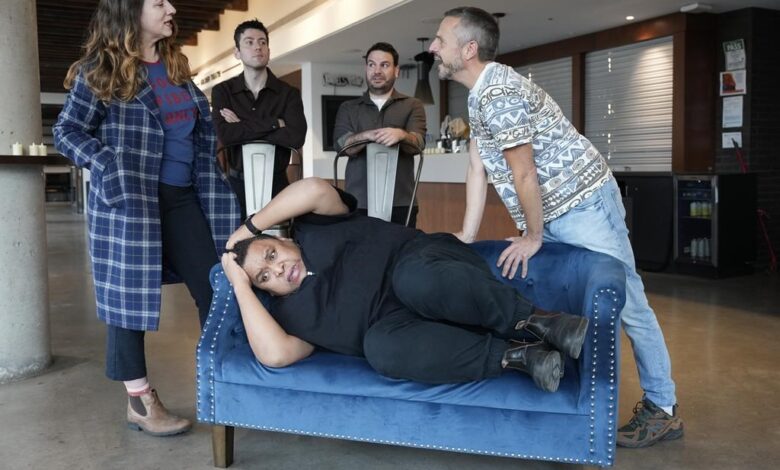
Michael Ross Albert’s dark comedy “The Bidding War” premiered at Toronto’s Crow’s Theatre in November 2024 with an intentionally absurd premise: the city’s last affordable house attracts a frantic 12-hour contest among buyers and agents. The play used physical comedy and escalating desperation to turn housing anxiety into a collective theatrical experience.
A personal source for the satire
Albert said buying his first condominium during the pandemic made the financial stakes feel surreal. He recalled leaving a bank with a money order representing more money than he imagined earning and becoming physically ill on Bay Street. That experience informed a story about people treating a basic need as a winner-takes-all competition.
The production was not a documentary about one transaction. It exaggerated the market’s incentives so that audiences could recognize the fear of missing a purchase, pressure to decide quickly and suspicion that another bidder has an unseen advantage.
The house becomes an arena
Crow’s Theatre described the plot as a routine open house that spirals into sabotage as agents turn on buyers and buyers turn on agents. Paolo Santalucia directed an 11-person ensemble, unusually large for a Canadian theatre production under post-pandemic budget pressure.
The cast included Aurora Browne, Peter Fernandes, Izad Etemadi, Amy Matysio, Fiona Reid, Gregory Prest, Steven Sutcliffe, Sophia Walker and Gregory Waters. The range of characters allowed the production to show scarcity through competing circumstances rather than a single heroic buyer.
Toronto’s real housing anxiety
A contemporaneous Royal LePage forecast placed the average Greater Toronto Area home price near $1.19 million by the end of 2024. An average is not the price of every neighbourhood or dwelling, but it helps explain why ownership appeared remote to many households.
Bidding practices can compress inspection and financing decisions into a short deadline. Buyers may feel compelled to waive protections or stretch budgets because they fear that the next property will be even less affordable. The play’s “last affordable house” makes that mindset literal.
Comedy as public argument
Albert said he wanted the work to expose unfairness and suggest that residents need not compete so brutally for a human necessity. Santalucia connected the frenzy to a deeper desire to possess and control property. Browne and Fernandes described a market that could reward profit-seeking and reveal ugly behaviour under scarcity.
Theatre cannot build homes or change mortgage rules. It can give an audience enough distance to examine behaviour that feels unavoidable in daily life. Laughter becomes a way to recognize how policy shortages are experienced as private panic.
Production details and the larger point
The world premiere opened November 12 in the Guloien Theatre. Crow’s official production page listed its run through December 19, although some early coverage carried a December 15 end date; ticket holders needed to check the venue’s current schedule.
“The Bidding War” turned a local real-estate ritual into a story about security, belonging and who gets to remain in a growing city. Its targets were not merely anxious buyers but the scarcity that pits them against one another. The production invited Toronto to see the housing crisis not as a collection of individual failures, but as a shared civic problem capable of being imagined differently.