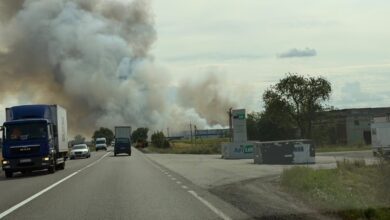
Explosion at an Iranian Mine Kills Dozens, State Media Says
A methane release and explosion at the Madanjoo coal mine near Tabas in eastern Iran killed dozens of workers on the night of September 21, 2024. Rescue figures changed over several days as teams entered underground sections, and the reported death toll ultimately rose to 50 after an injured miner died.
The disaster struck during an evening shift
About 70 workers were reported to be in blocks B and C of the mine when gas accumulated. Tabas lies in South Khorasan province, roughly 540 kilometres southeast of Tehran.
Early counts varied because authorities were still locating workers and reconciling shift records.
Methane can kill before or during an explosion
The gas is released from coal seams and can displace oxygen or form an explosive mixture with air. Officials said some recovered bodies showed no blast injuries, suggesting that gas exposure may have overcome miners before ignition.
Only a technical and forensic investigation could assign a cause of death in individual cases.
Ventilation and monitoring are critical controls
Modern coal-mine safety relies on continuous gas detection, effective ventilation, electrical controls, evacuation routes and trained rescue capacity. A methane hazard is known and manageable only when equipment, inspections and worker authority function in practice.
The existence of written rules does not show whether they were followed on the shift.
Rescue work carried additional danger
Responders had to contend with toxic atmosphere, confined tunnels and the possibility of another ignition. Initial reports placed trapped workers hundreds of metres underground along a long access passage.
Accurate updates needed to avoid declaring missing workers dead before teams completed their search.
Iran declared national mourning
Officials announced mourning and President Masoud Pezeshkian ordered an investigation while travelling to the United Nations. Families and fellow miners gathered as bodies were brought to the surface.
Compensation and ceremonial promises could not replace disclosure of preventable failures.
The mine’s operator faced scrutiny
Investigators needed maintenance logs, gas readings, ventilation records, staffing levels, inspection reports and testimony from survivors. They also needed to determine whether workers had reported dangerous conditions and whether production pressure discouraged a shutdown.
Responsibility should follow evidence across company management and regulatory oversight.
Iran has experienced other mining fatalities
Previous coal-mine explosions and collapses had exposed weaknesses in safety enforcement and emergency preparation. International sanctions can complicate access to equipment, but they do not remove an operator’s duty to stop work when conditions are unsafe.
Systemic comparisons should not pre-judge the specific Tabas inquiry.
The final count should retain its timeline
State media first reported lower totals, then authorities confirmed 34, 38 and 49 deaths as recovery continued. The death of an injured worker brought the figure to 50 on September 25.
Reporting the sequence explains apparent contradictions and respects people who were initially missing. The lasting public-interest question was not only how many died, but why methane reached lethal levels and whether alarms, ventilation or evacuation failed. Publishing the investigation and enforcing corrective measures would be the most meaningful accountability for the miners and their families.