Google’s WeatherNext 3 Pushes AI Forecasting Toward Higher-Resolution, Hourly Data

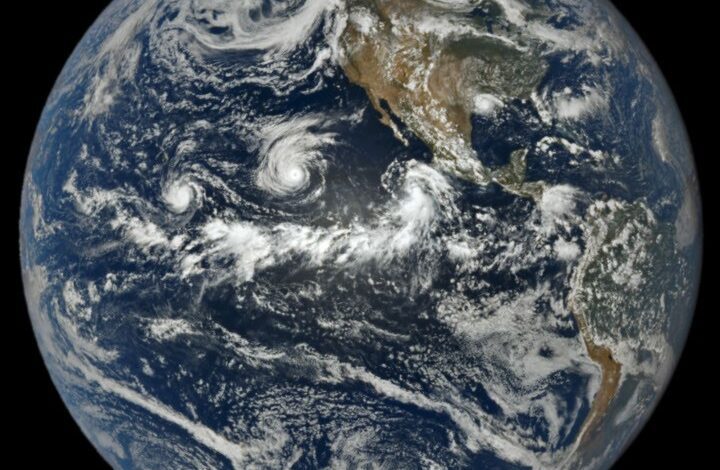
Google DeepMind has introduced WeatherNext 3, a new AI weather-forecasting system that it says uses live geostationary-satellite mosaics and produces hourly forecasts at higher resolution than its predecessor.
According to Google, the system provides surface temperature and moisture fields at about 5-kilometre resolution, other surface fields at about 10 kilometres and atmospheric fields at about 25 kilometres. The company says it is roughly five times sharper than WeatherNext 2 and is being deployed across products including Search, Maps, Gemini and Cloud.
Why resolution matters
Higher-resolution data can be useful for representing local gradients in temperature, wind and rainfall. That matters for sectors such as power management, transport, agriculture and disaster preparedness, where a broad regional forecast may not answer the operational question.
But a finer grid should not be confused with certainty. Weather prediction remains difficult, particularly for small-scale convection, intense rainfall and rapidly evolving storms. Forecast quality must be assessed against observations and compared with established numerical weather-prediction systems.
AI is joining, not replacing, the forecasting system
National meteorological agencies rely on multiple data streams, physical models, forecasters and warning protocols. AI can speed up some calculations and make high-volume data easier to use, but public warnings still need accountable agencies, local expertise and transparent uncertainty.
The practical test for WeatherNext 3 will be independent evaluation: how well it performs across climates, how it handles rare extremes and whether its outputs improve decisions when paired with human forecasters.
What users should do
For ordinary planning, AI-enhanced forecast tools may offer useful additional context. For safety-critical decisions, people should continue to follow official local weather agencies and emergency alerts. A polished forecast interface is not a substitute for an official warning.