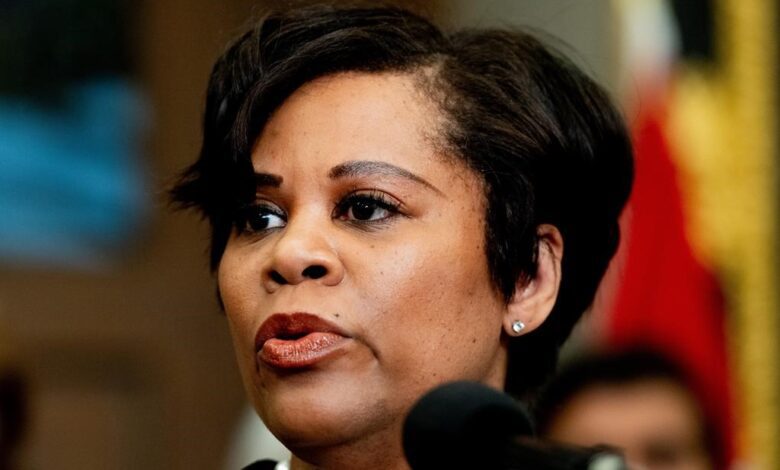
Alberta Premier Danielle Smith said in October 2024 that she wanted a mature, compassionate and less politicized debate over planned rules affecting transgender youth. Federal gender-equality minister Marci Ien replied that creating restrictions through legislation was itself a political act.
The proposals covered health, schools and sport
Smith had announced plans to prohibit gender-related surgery for minors, restrict puberty blockers and hormone treatment for people under 16, require parental involvement in school name and pronoun changes and create sex-based eligibility rules for female competitive sport.
Combining those subjects in one political message risked obscuring their different evidence, legal tests and practical effects. Medical treatment, classroom privacy and athletic categories are not interchangeable questions.
The government framed the measures as protection
Smith said irreversible decisions should generally wait until adulthood and argued that parents must be involved in choices affecting children. Her government said transgender Albertans would continue to be supported.
Supporters emphasized parental authority and concern about medical uncertainty. They also argued that female competitive divisions require clear eligibility rules.
Critics focused on harm and rights
Ien said freedom to live according to one’s identity was a right and offered to meet Smith. Federal health minister Mark Holland argued that care decisions should be made by patients, families and clinicians rather than prohibited broadly by politicians.
Medical groups, human-rights organizations and transgender advocates warned that disclosure rules could endanger a young person whose home was not supportive and that delayed care could worsen distress.
The legislature enacted three measures
In late 2024, Alberta passed Bill 26 on health care, Bill 27 amending education law and Bill 29 governing female amateur competitive sport. Each received royal assent in December.
The education law required parental notification when a student requested a gender-identity-related name or pronoun change and consent for students under 16. It also shifted designated instruction on gender identity, sexual orientation and sexuality to parental opt-in.
Health restrictions had defined age rules
The health measure prohibited regulated professionals from performing gender-reassignment surgery on minors and restricted puberty blockers and hormone therapies for gender dysphoria below age 16, with transition provisions for some existing patients.
Sixteen- and 17-year-olds could access specified treatment under conditions involving parents and health professionals. Accurate reporting should not describe the law as banning every form of support or treatment for all minors.
The measures faced legal challenge
In June 2025, an Alberta court granted an injunction blocking the hormone and puberty-blocker restrictions while a constitutional challenge proceeded, finding that implementation could cause irreparable harm to affected young people.
An injunction is not a final ruling on constitutionality. It preserves the position during litigation after the court applies a preliminary legal test.
The government later used override clauses
Alberta introduced legislation in 2025 invoking notwithstanding provisions for contested parts of the health, education and sport policies. A valid Charter section 33 declaration can protect legislation from specified Charter challenges for up to five years.
Using that power is constitutional, but it is also an unmistakably political decision because it limits the courts’ ability to provide remedies under listed rights.
Compassion depends on process and evidence
Transgender youth are a small and diverse group, not an abstract campaign category. Families can disagree, and clinical decisions depend on age, diagnosis, duration of distress and individual circumstances.
The debate could become less hostile, but it could not become non-political once government selected binding province-wide rules. Trustworthy coverage should describe exactly what each law does, present medical and legal evidence without caricature and centre the people who bear the effects. Calling for civility is valuable; it does not remove the government’s responsibility for the policy choice or critics’ right to challenge it.