Myanmar’s Military Asks Rebels to Stop Fighting and Join in Elections
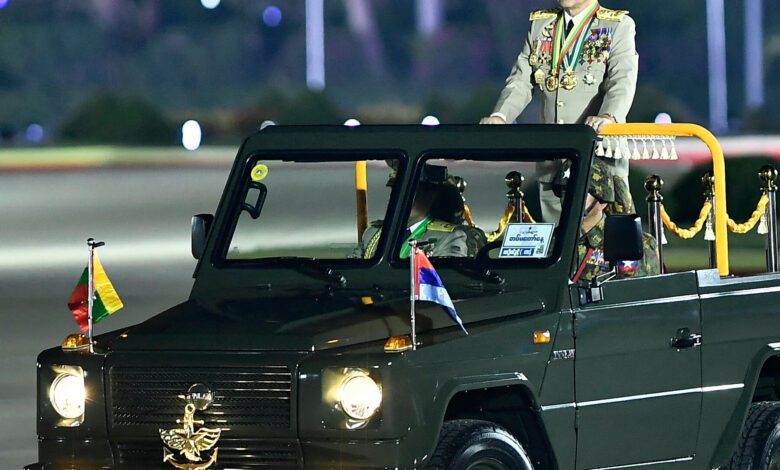
Myanmar’s military government called in September 2024 for armed resistance groups to stop fighting and take part in elections. Opposition leaders rejected the invitation, arguing that a military which overthrew the elected government and continued attacking civilians could not offer a credible route back to democracy.
The appeal followed battlefield setbacks
Ethnic armed organizations and People’s Defence Forces had captured territory and military positions across several regions. The junta faced stretched forces, economic pressure and growing reliance on air power.
Its State Administration Council described opponents as terrorists and invited them to pursue political issues through parties and elections. That language asked resistance groups to disarm without first establishing neutral guarantees.
The conflict began with the 2021 coup
The military seized power after the National League for Democracy won the November 2020 election. It alleged widespread fraud without producing evidence sufficient to justify cancelling the result.
Security forces suppressed mass protests, and parts of the opposition formed an underground National Unity Government and armed defence groups. Older ethnic conflicts then merged with a nationwide anti-coup struggle.
Opposition leaders rejected the proposal quickly
The National Unity Government and several commanders said negotiations under the junta’s terms would legitimize military rule. They demanded an end to dictatorship and accountability rather than participation in an election controlled by the armed forces.
Their rejection did not mean dialogue was inherently impossible. It reflected the absence of trust, enforcement and a mutually accepted political framework.
A credible election needs more than a date
Free elections require broad participation, independent administration, media access, freedom to campaign and protection from coercion. A vote held while major parties are banned, leaders detained and territory contested cannot repair legitimacy by itself.
Aung San Suu Kyi and other elected officials remained imprisoned. Resistance-held areas also made nationwide registration and polling practically difficult.
Civilians carried the heaviest cost
United Nations investigators reported escalating war crimes and crimes against humanity, including airstrikes, village burnings, torture and attacks on detainees. Armed opposition groups were also obligated to protect civilians and detainees.
Displacement, food insecurity and damaged health and education systems expanded beyond the front lines. A political initiative had to address humanitarian access, not merely armed surrender.
Regional powers influenced the calculations
China maintained relations with the junta while also communicating with armed groups along its border, prioritizing stability, trade and strategic projects. Thailand, India and ASEAN faced refugees, crime and cross-border disruption.
Outside pressure could encourage local ceasefires, but neighbouring states did not share a single vision for Myanmar’s government. ASEAN’s peace plan produced little enforcement.
The election promise did not resolve legitimacy
The junta later announced a phased election process after repeatedly changing its timetable. Restrictions on parties and conflict across large areas led the United Nations and many observers to question whether such voting could be free or inclusive.
An election organized by one belligerent is not automatically a peace negotiation. Its credibility depends on who can participate and whether results can change power.
The offer was significant but insufficient
The statement showed that battlefield pressure had altered the military’s public posture. It was one of the clearest invitations to opponents since the coup, even though it retained the junta’s framing and conditions.
A workable process would need civilian protection, monitored ceasefires, release of political prisoners, inclusive dialogue and agreement on federal democracy. Without those foundations, the call to exchange resistance for military-run elections looked less like compromise than a demand for submission.